What Actually Matters When Shopping for Sneakers With Bunions or Wide Feet
Quick Answer: Look for a wide toe box (not just a wide overall size), soft or stretchable upper material near the bunion area, and a lacing system that lets you adjust tension unevenly across the shoe. Going up a full size often doesn’t solve bunion discomfort — the shape matters more than the length.
Bunions turn ordinary sneaker shopping into a guessing game, since the pain point isn’t about overall foot length at all. A shoe that’s technically ‘wide’ in the size label can still pinch exactly where it hurts most if the toe box shape is wrong.
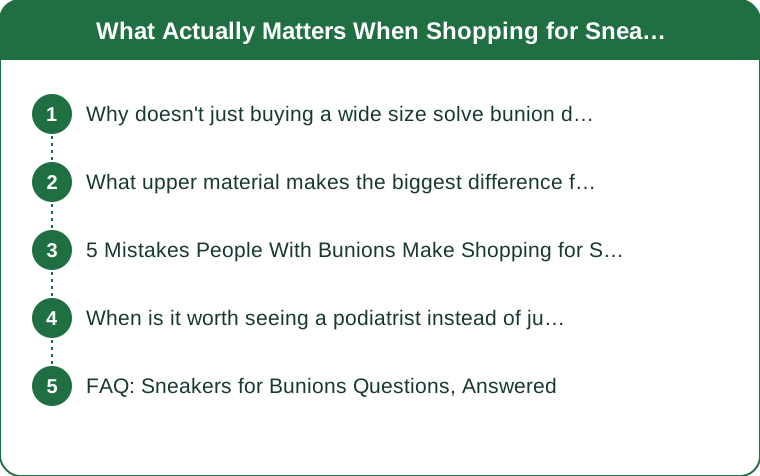
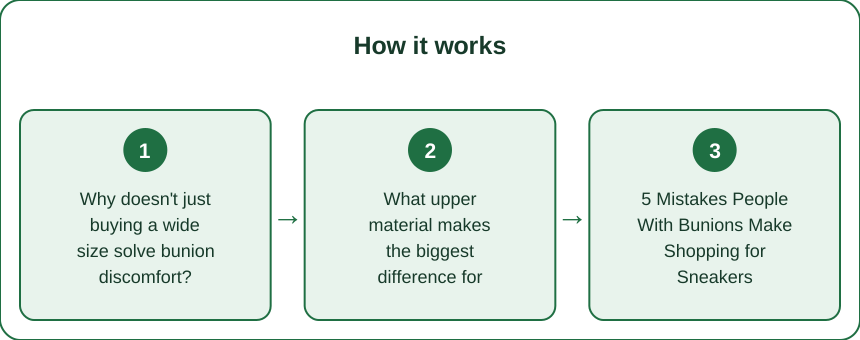
Why doesn’t just buying a wide size solve bunion discomfort?
Standard ‘wide’ sizing typically adds width evenly across the whole shoe, but a bunion creates a specific pressure point at the base of the big toe that a uniformly wider shoe doesn’t necessarily relieve. What actually matters is the toe box shape — specifically whether it tapers narrow toward the front or stays roomy and rounded all the way to the toes.
A shoe with a naturally wide, rounded toe box in a regular size can sometimes fit a bunion better than a ‘wide’ labeled shoe with a narrow, pointed toe shape.
What upper material makes the biggest difference for bunion comfort?
Soft knit or mesh uppers that stretch and flex around pressure points tend to cause far less irritation than stiff leather or synthetic overlays, which hold their shape rigidly against a bunion’s protrusion all day. Many running and walking shoe lines now offer knit uppers specifically because they accommodate a wider range of foot shapes without needing a specialty size.
If a shoe has a structured overlay panel that sits directly over where your bunion presses, that’s often the exact spot that will cause rubbing, regardless of the size or width label.
5 Mistakes People With Bunions Make Shopping for Sneakers
1. Sizing up in length to fix a width problem. A longer shoe with the same narrow toe shape just adds dead space at the toe while the bunion still gets pinched.
2. Ignoring the lacing system. A standard lacing pattern pulls tension evenly, which can worsen bunion pressure — look for shoes with lacing that lets you skip an eyelet near the pressure point.
3. Buying based on how it feels standing still. Bunion pain often shows up during the toe-off phase of walking, not standing, so a quick in-store stand test can miss the real problem.
4. Choosing style over toe box shape. A trendy pointed-toe sneaker silhouette is one of the worst shapes for bunion accommodation, no matter the brand.
5. Not checking return policies before buying online. Bunion fit is hard to judge from photos — a flexible return window matters more here than almost any other shoe purchase.
When is it worth seeing a podiatrist instead of just shopping smarter?
If bunion pain is worsening, affecting your gait, or not improving with better-fitting footwear, it’s worth a conversation with a podiatrist rather than continuing to shop around it. A professional can also point you toward specific brands or custom orthotic inserts that work well for your particular bunion severity.
This is general information, not medical advice — persistent or worsening foot pain deserves a professional evaluation rather than trial and error with shoe purchases alone.
FAQ: Sneakers for Bunions Questions, Answered
Do bunion-specific shoe brands actually work better than regular wide sizes?
Often yes, since brands marketing specifically toward bunions tend to design the toe box shape itself differently, not just widen the overall size uniformly.
Should I buy a half size up if I have bunions?
Not automatically — a half size up helps if length is genuinely an issue, but if the toe box shape is narrow, extra length alone won’t relieve the pressure point.
Are knit sneakers durable enough for daily wear with bunions?
Modern knit uppers have improved significantly in durability and hold up well for daily walking or light athletic use, though they may show wear faster than leather under very heavy daily mileage.
TL;DR:
- Toe box shape matters more than overall width label for bunion comfort
- Soft, stretchable knit or mesh uppers reduce pressure point irritation
- Skip narrow, pointed-toe styles regardless of brand or wide sizing
- See a podiatrist if pain persists despite better-fitting shoes
Stop chasing a bigger size and start checking the actual toe box shape — that’s the detail that decides whether a sneaker helps or hurts. This is general information, not medical advice.
Keep Reading
This article is for general informational and styling purposes only. Fit, sizing, and product availability may vary.