How to Break In New Sneakers Without the Blisters (and Know When to Just Return Them)
Quick Answer: Break-in time for new shoes is usually 2 to 4 wears of 1–2 hours each, starting indoors. Well-fitting sneakers feel slightly stiff at first but shouldn’t genuinely hurt. If you get sharp pain or a blister in the same spot twice, that’s a fit problem — return them rather than trying to break them in.
There’s a specific optimism that happens on day one with new sneakers. They’re a little snug at the heel, sure, but they’ll mold to your foot. That’s what breaking them in means, right?
Three miles later you’re limping home with a blister the size of a nickel, still telling yourself they just need more time.
Some of that stiffness really does soften. Some of it is the shoe telling you it’s the wrong shape for your foot — and the trick is knowing which is which before you lose the return window.
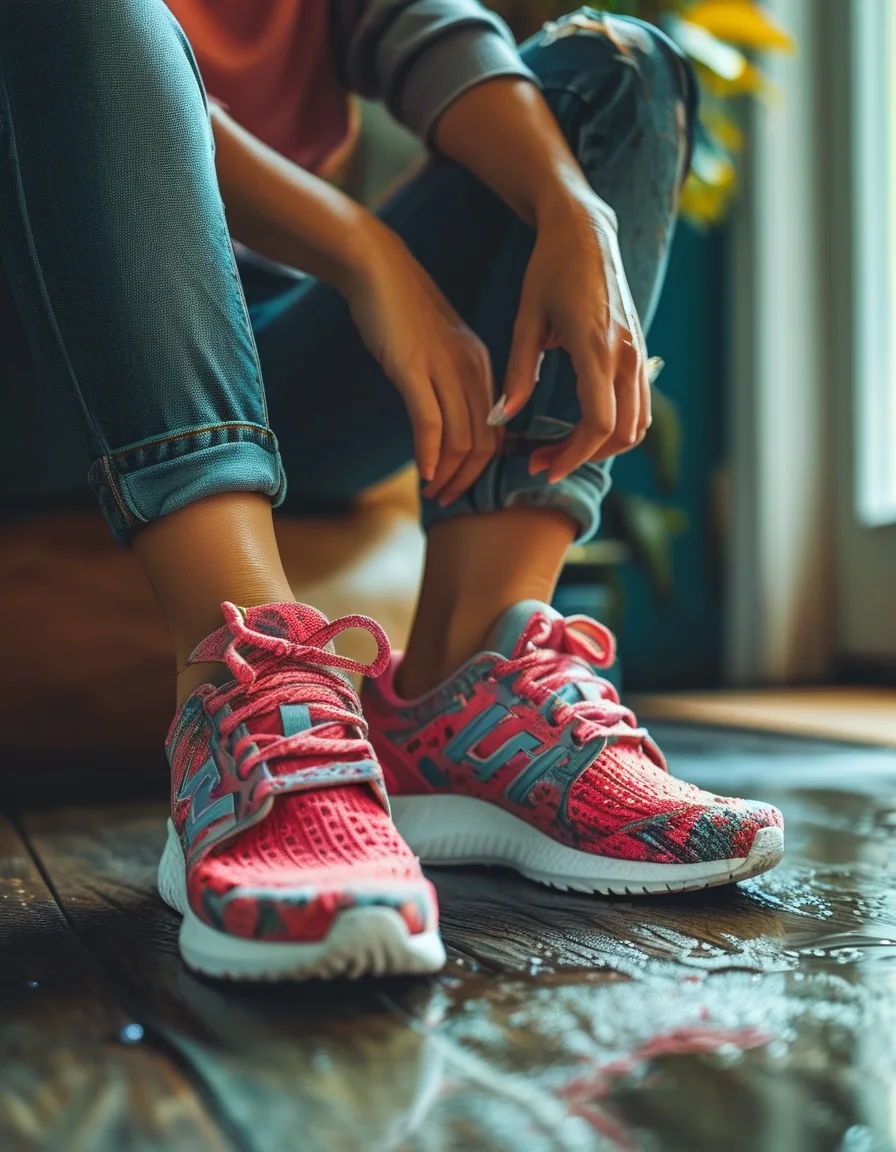
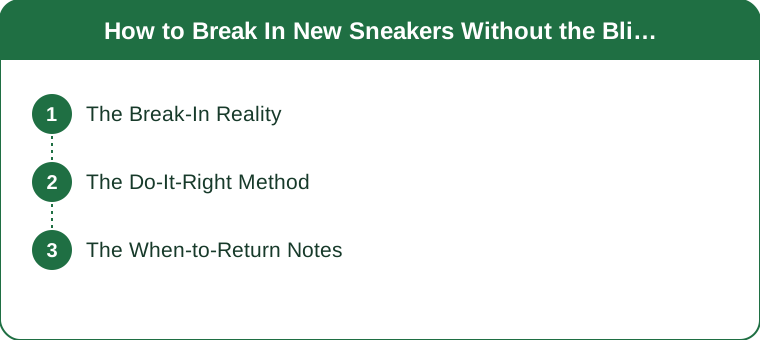
How Long Is the Break-In Time for New Shoes?
For most modern sneakers, 2 to 4 short wears — call it 4 to 8 hours of total wear time — is enough for the upper to soften and the footbed to take an impression of your foot.
What actually changes during break-in is narrower than people assume:
- The upper relaxes. Knit and mesh soften within a couple of wears; leather takes longer, sometimes two weeks.
- The footbed compresses slightly under your arch and heel.
- The outsole flexes more easily at the toe.
What does not change: length, width across the ball of the foot, heel-cup shape, and where the seams sit. Those are structural. A shoe that’s too short at the toe on day one is too short forever.
So the working rule is simple. Well-fitting sneakers are stiff, not painful. Mild pressure that fades as you walk is break-in. Sharp pinching, numb toes, or a hot spot that appears in the first ten minutes is fit.

How Do You Break In Sneakers Without Blisters?
Slowly, indoors, and with the right socks. The whole method is about eight minutes of thought.
1. Wear them around the house first. One hour, on carpet, with the tags-off decision still reversible. Any real fit problem shows up in that hour.
2. Build up gradually. Hour one indoors, then a 20-minute walk, then an hour out, then a normal day. Don’t jump from the box to a full day at a theme park.
3. Wear proper socks. Moisture-wicking synthetic or wool, not cotton. Cotton holds sweat, sweat softens skin, and soft damp skin is exactly what blisters need. This one change fixes more break-in problems than anything else on this list.
4. Lace for your foot. Heel slipping? Use the extra top eyelet for a runner’s loop. Pressure across the top? Skip an eyelet over the sore spot. Lacing solves a surprising share of “these don’t fit” complaints.
5. Protect hot spots immediately. The moment you feel warmth or rubbing, stop and cover it — blister plaster, tape, or a bit of moleskin. A hot spot caught early never becomes a blister. A hot spot ignored for two miles always does.
6. Don’t do your long run in them. New running shoes get short easy miles first, ideally two or three runs of 2–3 miles, before anything long or fast.
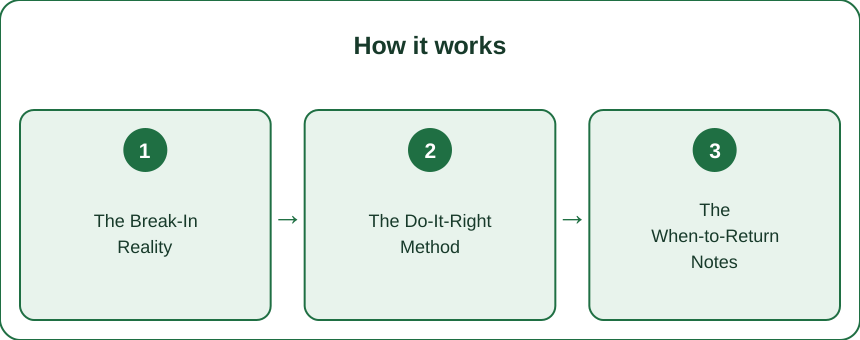
Myth vs Fact
Myth: Every shoe needs breaking in, so pain at first is normal. Fact: A correctly fitted sneaker feels comfortable in the store and merely a bit stiff for the first few wears. Genuine pain on day one is a fit signal, not a phase.
Myth: Wear them with thick socks and they’ll stretch to fit. Fact: This stretches the upper slightly, but does nothing for length or heel shape — and it’s how people talk themselves past the return window.
Myth: A hairdryer or freezer bag of water will fix a tight shoe. Fact: These old tricks can stretch leather a half-size at best and can wreck glued modern midsoles. On a $140 running shoe, it’s a bad trade.
Myth: Blisters mean you’re not tough enough yet. Fact: Repeated blisters in the same spot are friction from a shape mismatch. Toughness doesn’t change the shape of the shoe.
When Should You Just Return Them?
Return them if any of these show up in the first week:
- Persistent pain that doesn’t fade over 2–3 wears.
- A blister in the same spot twice. Same location, twice, is a mismatch — not bad luck.
- Numbness or tingling in the toes, which usually means the shoe is too narrow.
- Your heel slips even after a runner’s-loop lacing fix.
- Your toes touch the end. You want roughly a thumb’s width of space, and more for running, since feet swell up to half a size on longer efforts.
Most retailers offer 30 to 60 days, and several running brands allow returns on shoes you’ve actually run in. Keep the box, and decide before that window closes.
Then get fitted properly — measure both feet late in the day, when they’re at their largest — and while you’re there, check the pair you’re replacing. Walking and running shoes are generally due for replacement around 300 to 500 miles, or when the midsole stops springing back.
Mini FAQ
Can you break in shoes faster?
Not really, and trying is where injuries come from. You can make each wear more comfortable — better socks, smarter lacing, taped hot spots — but the upper softens on its own schedule. Wearing them for eight hours on day one doesn’t accelerate anything; it just gives you blisters.
Should new running shoes feel tight?
Snug through the midfoot, yes. Tight across the toes, no. You want your foot held in place without pressure points, plus about a thumb’s width in front of your longest toe to allow for swelling and forward slide on downhills.
What’s the fastest fix for a heel that slips?
The runner’s loop, also called heel lock lacing. Use the extra eyelet at the top of each side to make a small loop, thread the opposite lace through it, and pull down. It cinches the ankle collar without tightening the rest of the shoe, and it takes about thirty seconds.
TL;DR
- Break-in is 2–4 short wears; start indoors, then build up gradually.
- Uppers soften and footbeds compress — length, width and heel shape never change.
- Wicking socks, smart lacing, and taping hot spots early prevent most blisters.
- Never debut new sneakers on a long run or a full day of walking.
- Persistent pain, numbness, or repeat blisters in one spot = wrong fit. Return them.
- Decide inside the return window, get fitted late in the day, and replace worn pairs at 300–500 miles.
Break them in gently, and know when the shoe is simply telling you the truth.
Keep Reading
This article is for general informational and styling purposes only. Fit, sizing, and product availability may vary.