How Long Before Your Sneaker's Cushioning Actually Wears Out (Even If It Looks Fine)
Quick Answer: Midsole cushioning typically breaks down meaningfully after 300-500 miles or roughly 6-12 months of regular use, well before the outsole tread or upper fabric shows obvious wear — visual condition alone is an unreliable signal for when to replace sneakers.
The sneakers look practically new from the outside. The cushioning underneath has quietly been losing its bounce for months.

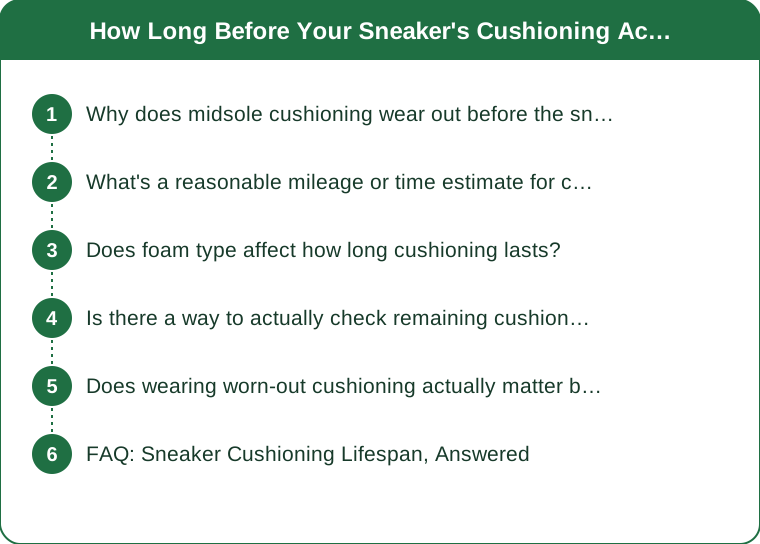
Why does midsole cushioning wear out before the sneaker looks worn?
Midsole foam compresses with every step, and that compression is a chemical and structural fatigue process happening entirely inside the material — it doesn’t require visible surface wear to occur. Foam cells lose their ability to fully rebound over repeated compression cycles, well before the outer tread pattern or upper material shows comparable wear.
What’s a reasonable mileage or time estimate for cushioning breakdown?
Commonly cited estimates put meaningful cushioning loss around 300-500 miles for running-focused shoes, or roughly 6-12 months for regular daily wear, though this varies by foam type, body weight, and usage intensity — heavier use or higher-impact activity compresses foam faster than light, occasional wear.
Does foam type affect how long cushioning lasts?
Yes — some newer foam compounds are engineered for better long-term rebound retention compared to older, denser foam types, so two sneakers of similar age and mileage can have meaningfully different remaining cushioning life depending on the specific foam technology used.

Is there a way to actually check remaining cushioning without buying new shoes to compare?
A rough at-home method is pressing a thumb firmly into the midsole and noting how quickly and fully it springs back — sluggish or incomplete rebound compared to memory of how the shoe felt new is a reasonable, if imprecise, indicator that meaningful compression has occurred.
Does wearing worn-out cushioning actually matter beyond comfort?
Yes — compressed, less responsive cushioning provides less shock absorption, which can increase cumulative impact stress on joints over time, particularly relevant for anyone using the shoes for running or extended standing, making this more than just a comfort consideration.
FAQ: Sneaker Cushioning Lifespan, Answered
Does rotating between two pairs actually extend cushioning life?
Yes — giving foam time to rest and partially rebound between wears is a well-supported reason rotation extends the useful life of cushioning compared to wearing one pair daily without breaks.
Is it worth replacing shoes purely on a mileage estimate even if they feel fine?
Mileage is a useful guideline, but paying attention to how the shoe actually feels (responsiveness, any new aches) alongside mileage tracking gives a more complete picture than either alone.
Does storage or climate affect midsole foam degradation over time?
Some foam types degrade slightly faster with prolonged heat or UV exposure, so storing sneakers away from direct sun or hot car trunks helps preserve cushioning life independent of actual wear.
TL;DR:
- Midsole cushioning breaks down well before visible outsole or upper wear appears
- 300-500 miles or roughly 6-12 months is a common estimate for meaningful compression
- Foam type affects how quickly rebound capacity is lost over time
- A simple thumb-press test gives a rough, informal read on remaining cushioning
- Rotating between two pairs meaningfully extends cushioning lifespan
Looking fine on the outside isn’t the same as still performing on the inside.
Keep Reading
This article is for general informational and styling purposes only. Fit, sizing, and product availability may vary.