How to Choose the Right Running Shoes (Your Feet Will Thank You)
The right running shoes can be the difference between comfortable, injury-free running and aching feet and knees. But choosing them is about more than looks — fit, support and your own feet all matter. Here is why the right running shoes matter, how to choose them, and how to know when to replace them.

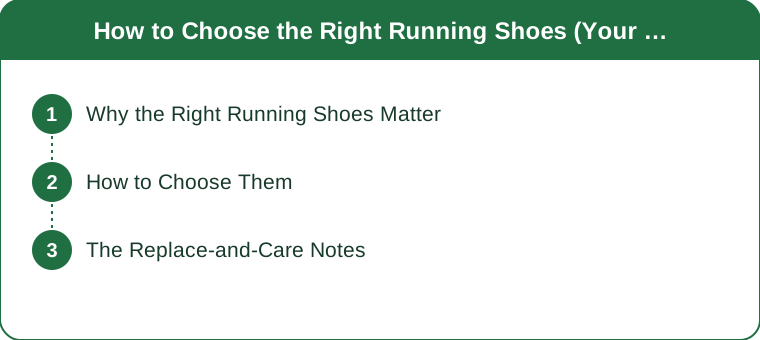
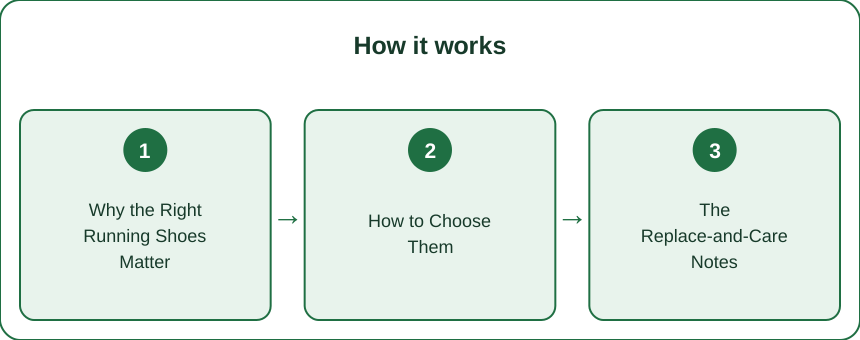
Why the Right Running Shoes Matter
The foundation of your run: the the-injury-prevention (the the right shoes helping prevent foot, knee and other injuries from the workout-shoes logic — the prevent-injuries), the the-comfort-and-performance (the well-fitting shoes making running more comfortable and enjoyable from the sneaker-fit logic — the comfort-and-performance), the the-support-for-your-feet (the shoes matched to your feet supporting your stride from the workout-shoes logic — the support-your-stride), the the-wrong-shoes-cause-problems (the ill-fitting or worn shoes causing pain and injury from the replace-walking-shoes logic — the the-wrong-shoe-problem), the the-your-feet-are-individual (the shoe needs varying by foot shape and running style from the sneaker-fit logic — the individual-feet), and the reframe (the running shoes as the foundation of comfortable, injury-free running — the right pair for your feet and stride, not just looks).

How to Choose Them
Finding the right pair: the the-get-the-right-fit (the a proper fit with room in the toe box, snug but not tight from the sneaker-fit logic — the fit-first), the the-consider-your-feet-and-gait (the choosing for your foot shape and running style — the match-your-feet), the the-try-them-and-test (the trying shoes on and testing the feel, ideally later in the day when feet are larger from the sneaker-fit logic — the try-and-move), the the-the-right-support-and-cushioning (the the level of support and cushioning that suits you — the support-and-cushion), the the-running-specific-shoes (the shoes designed for running, not general trainers from the workout-shoes logic — the running-specific), the the-lace-for-fit (the lacing techniques for a secure fit from the lacing logic — the lace-for-fit), the the-do-not-just-go-by-brand-or-looks (the fit and function over brand or appearance from the sneaker-fit logic — the function-over-looks), and the the-break-them-in (the breaking in new shoes gradually from the breaking-in logic — the ease-into-new-shoes).
The Replace-and-Care Notes
Keeping them working: the the-replace-when-worn (the replacing running shoes when the cushioning and support wear out from the replace-walking-shoes logic — the replace-worn-shoes), the the-track-the-mileage (the noting mileage, since shoes wear out over a range of miles from the replace-walking-shoes logic — the watch-the-mileage), the the-signs-they-are-done (the aches, worn treads and flattened cushioning signaling replacement from the replace-walking-shoes logic — the the-worn-signs), the the-rotate-pairs (the rotating pairs to extend their life if you run often — the rotate-them), the the-care-for-them (the caring for and cleaning shoes to maintain them from the sneaker-cleaning logic — the maintain-them), the the-right-shoes-for-the-surface (the appropriate shoes for road or trail — the surface-appropriate), and the frame (the running shoes as a well-fitting, feet-and-gait-matched, running-specific pair replaced when worn — comfortable, injury-free running. Get the right fit for your feet, choose running-specific support and cushioning, break them in, and replace them when the cushioning wears out).
The right running shoes can be the difference between comfortable, injury-free running and aching feet and knees — and choosing them is about more than looks. They matter because they help prevent injuries, make running more comfortable, support your stride, and prevent the problems ill-fitting or worn shoes cause, with needs varying by foot. Choose them by getting the right fit (room in the toe box, snug but not tight), considering your feet and gait, trying and testing them later in the day, picking the support and cushioning that suit you, choosing running-specific shoes, lacing for fit, prioritizing function over looks, and breaking them in gradually. Care for them by replacing when worn, tracking mileage, watching for worn-out signs, rotating pairs, cleaning them, and matching them to the surface. Comfortable, injury-free running.
Keep Reading
This article is for general informational and styling purposes only. Fit, sizing, and product availability may vary.