How to Rotate Two Pairs of Trainers and Make Both Last Longer
Quick Answer: Midsole foam compresses under load and needs time to recover, and a shoe worn on consecutive days never fully rebounds. Alternating two pairs gives each roughly 24 to 48 hours of recovery, which extends the usable life of both beyond what you would get wearing them in sequence. It also lets each pair dry out fully, which slows the breakdown of the upper and reduces odour. Two pairs used alternately typically outlast two pairs used one after the other.
Two pairs, worn one at a time until it dies, then the next one.
The same two pairs alternated will carry you noticeably further, and cost exactly the same.

Why does alternating extend shoe life?
Midsole foams compress under load and recover elastically over time, and that recovery is not instantaneous.
A shoe worn daily starts each session partly compressed, which means it is cushioning from a lower baseline and takes more permanent set.
Giving a shoe 24 to 48 hours allows fuller rebound, and shoes that get that recovery hold their cushioning properties longer.
Moisture is the second mechanism. A shoe absorbs a considerable amount of sweat, and materials degrade faster when repeatedly worn damp.
Drying takes longer than people think - often more than 24 hours for the interior of a shoe in normal room conditions, and much longer in a cool autumn hallway.
So alternating addresses both compression and moisture, which are the two things that actually kill a shoe.
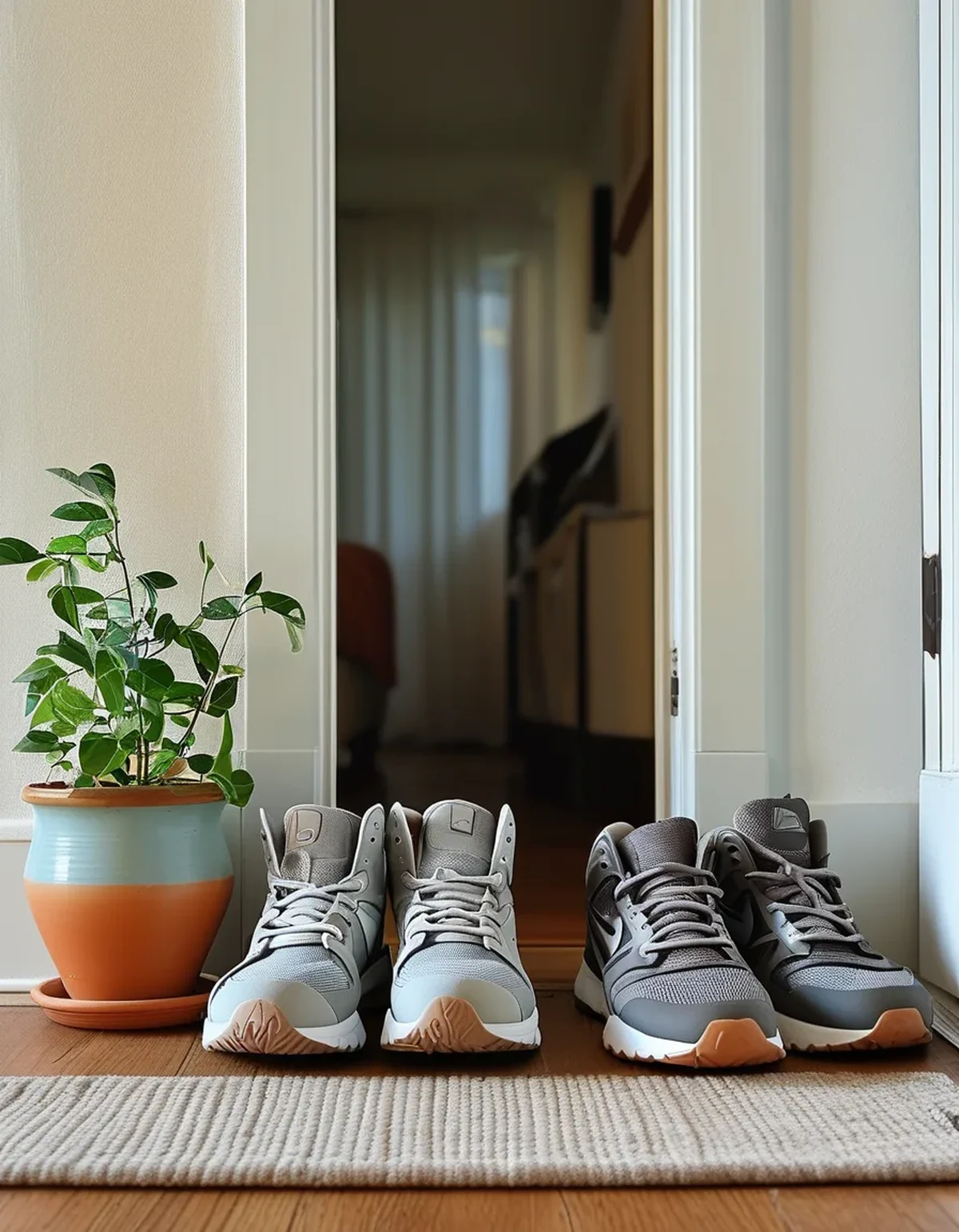
Should the two pairs be identical or different?
Different is generally better, and this is where most of the additional benefit sits.
Different shoes load your feet and legs slightly differently - different stack heights, drops and foam firmness change the distribution of stress.
Some research in runners has associated shoe rotation with lower injury rates, with the proposed mechanism being variation in loading rather than any single shoe being better.
Two identical pairs still get the recovery benefit, so it is not wasted, but you lose the variation.
A common practical split: one cushioned, softer pair for easy days and longer wear, and one firmer, more responsive pair for faster or shorter sessions.
For non-running wear, the split is simpler: one for walking and standing, one for the gym, and keep the gym pair off the pavement.
How should I actually rotate them?
Alternate by day, not by activity, as a default. Simple rules survive; complicated ones do not.
Leave the unworn pair somewhere ventilated, not in a gym bag or a closed cupboard.
Remove the insoles after a sweaty session so the interior actually dries. This is the single most effective drying step and takes five seconds.
Never dry them on a radiator or with a hairdryer. Heat degrades adhesives and foam, and radiator drying is the classic autumn shoe killer.
Stuff with newspaper if they are genuinely wet, changing it after an hour.
And loosen the laces fully when you take them off rather than heeling them off, which is the fastest way to break down the heel counter.
How do I know when a pair is actually done?
Mileage guidance for running shoes is commonly quoted in the region of 300 to 500 miles, but it varies enormously by shoe, surface, and body weight.
The better signals are physical. Press the midsole with your thumb - if it feels dead and does not spring back, the foam is done.
Look at the outsole wear pattern. Once you can see through to the midsole in the high-wear areas, the shoe is past useful.
Set them on a flat surface and look from behind. A heel that leans noticeably is a compressed midsole and is worth retiring.
New aches after months of comfortable use are worth taking seriously as a signal, particularly if they resolve in a different pair.
And the creases in the midsole foam - deep, permanent horizontal creasing means the foam has taken a set. This is general information, not medical advice.
Myth vs Fact: Shoe Rotation
Myth: rotating shoes is only for serious runners. Fact: the compression and moisture mechanisms apply to anyone wearing shoes daily. People who stand all day at work benefit as much as runners do.
Myth: two pairs cost twice as much. Fact: they cost the same per pair and last longer each, so the cost per month of use is lower. You buy the second pair sooner, not more pairs overall.
Myth: shoes need breaking in. Fact: modern running and training shoes should feel good immediately. Discomfort on day one usually means the fit is wrong, and breaking in is mostly a leather-shoe concept that migrated where it does not belong.
Myth: you can tell a shoe is finished by how it looks. Fact: uppers frequently outlast midsoles by a wide margin. A shoe can look nearly new and provide almost no cushioning, which is exactly how people end up with mystery aches.
Myth: washing trainers ruins them. Fact: gentle hand cleaning is fine. Machine washing and tumble drying is what damages adhesives and foam - and heat is the specific problem.
Myth: the more expensive pair should be the everyday one. Fact: everyday wear on pavement is the harshest use case. Save the specialist pair for its purpose and let a cheaper, durable pair take the daily abuse.
FAQ: Trainer Rotation Questions, Answered
Do I need two pairs or three?
Two captures most of the benefit. Three helps if you train most days or if your shoes rarely dry fully, which is common in autumn and winter.
How long does a shoe need to recover?
Roughly 24 to 48 hours for foam rebound, and often longer than 24 hours for the interior to dry fully in cool conditions.
Can I rotate a running shoe and a gym shoe?
Yes, and it is a sensible pairing since they load differently. Just avoid using a cushioned running shoe for heavy lifting, where a flatter, firmer base is preferable.
Does rotation prevent injury?
Some research in runners has associated rotation with lower injury rates, likely through varied loading. It is one factor among many. This is general information, not medical advice.
Should I remove the insoles every time?
After sweaty sessions, yes - it is the fastest way to let the interior dry. For light wear it is not necessary.
How do I stop them smelling?
Dry them properly, remove the insoles, alternate pairs, and let them air rather than storing them in a bag. Most odour problems are drying problems.
Is it worth buying two cheaper pairs instead of one expensive one?
Often yes, for everyday use. Two mid-price pairs alternated will usually outlast one premium pair worn daily, and you get the loading variation as a bonus.
TL;DR:
- Midsole foam needs 24 to 48 hours to rebound, and daily wear never lets it.
- Alternating two pairs extends the usable life of both, at the same total cost.
- Different shoes are better than two identical pairs, because loading varies too.
- Remove the insoles after sweaty sessions, and never dry shoes on a radiator.
- Judge replacement by midsole feel, heel lean and creasing, not by how the upper looks.
- Loosen the laces properly instead of heeling them off.
Same two pairs, alternated instead of consumed in sequence, and you get more out of both. This is general information, not medical advice.
Keep Reading
This article is for general informational and styling purposes only. Fit, sizing, and product availability may vary.