The Two-Pair Rotation: Why Alternating Sneakers Makes Both Last Longer (and Your Feet Happier)
Quick Answer: Midsole foam compresses with every step and needs roughly 24-48 hours to fully rebound — daily-driving one pair means running tomorrow on foam still flattened from today, which accelerates permanent compression AND gives your feet a degraded platform. A two-pair rotation lets each pair recover (and dry — moisture breaks foam down faster), typically extending total lifespan beyond what the same money in sequential pairs delivers, while runners in rotation studies show lower injury rates. The system: two different-but-appropriate pairs, alternated by day, replaced on a staggered schedule.
The one-true-pair approach feels economical: buy, wear daily, wear out, repeat. But foam physics runs a quiet counter-argument — the pair that never rests never fully rebounds, so you’re paying full price for a midsole performing below spec most of its shortened life.

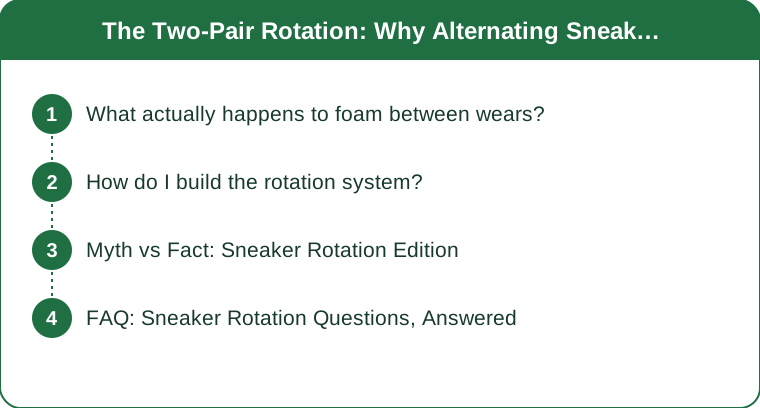
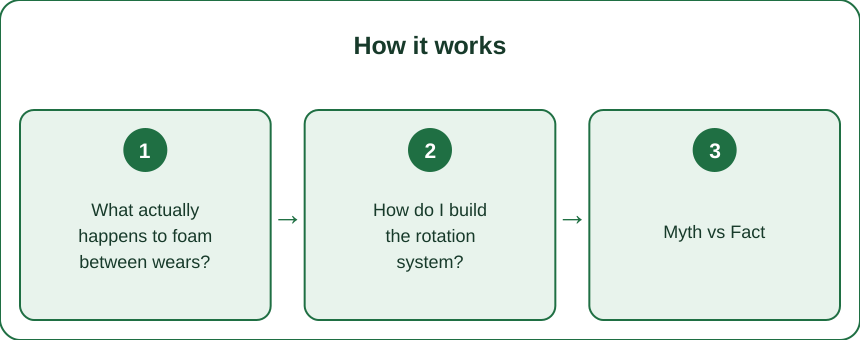
What actually happens to foam between wears?
The midsole’s daily cycle:
- Compression on duty: every footstrike compresses the foam’s cell structure — thousands of times per hour of walking, more with running. By day’s end the midsole is measurably thinner and firmer than at dawn: temporarily flattened cells, plus accumulated moisture (sweat and humidity) softening the foam matrix from inside.
- Recovery off duty: given ~24-48 hours unloaded, the cells re-expand toward original geometry and the moisture evaporates — the pair on the shelf is genuinely repairing itself. (This is why shoes ‘feel better’ after a rest day — they are, structurally.)
- The daily-driver penalty: re-loading foam before recovery completes converts some temporary compression into permanent compression — the cells fatigue faster, cushioning life shortens, and the shoe spends most days performing at its tired-evening spec rather than its rested-morning one. Moisture never fully clearing compounds it (damp foam breaks down faster, and damp interiors breed the odor-and-hygiene problems that retire shoes early).
The injury-relevant note from running research: runners rotating multiple pairs showed meaningfully lower injury rates in cohort studies — the proposed mechanism being that different shoes vary the loading pattern slightly, distributing stress across tissues rather than grooving one repetitive strain path. Recovery for the shoe, variety for the legs.
How do I build the rotation system?
The basic two-pair setup:
- Pair selection: two appropriate-for-your-use pairs — ideally different models or brands (the loading-variety benefit rides on difference; two identical pairs only buys the recovery benefit). The classic combo: a cushioned pair and a firmer/lighter pair, alternated.
- The alternation rule: simple day-on-day-off beats complicated schemes — yesterday’s pair rests and dries today. Post-wear care that multiplies the benefit: loosen laces and open the throat (airflow), remove insoles after sweaty days, never dry on radiators (heat is foam’s other enemy).
- The staggered replacement trick: buy the second pair when the first hits mid-life — from then on you’re always rotating a newer and an older pair, replacing the older as it dies. Benefits: never running on two dead pairs, always having a broken-in backup, and a built-in comparison that makes ‘is this pair done?’ obvious (the moment the old pair feels notably worse than the newer one, it’s answered).
Reading end-of-life honestly: visible midsole compression wrinkles, the lean-check on a flat surface (worn shoes tilt), press-testing the foam (dead foam stops springing), and the body’s report — new aches appearing in old shoes are the classic mileage alarm. Typical ranges: running shoes ~500-800km, walking-daily wear 6-12 months of rotation — with body weight, gait, and surfaces moving the numbers substantially. This is general information, not medical advice.

Myth vs Fact: Sneaker Rotation Edition
Myth: Rotation is running-nerd overkill for regular daily wear. Fact: The foam physics is identical for standing-and-walking days — arguably more relevant for the on-feet-all-day crowd (nurses, teachers, retail), whose shoes absorb runner-level daily loading without runner-level replacement habits. The tired-legs difference between rested and unrested shoes is most reported exactly there.
Myth: Two pairs costs twice as much. Fact: The same money, differently scheduled — two pairs rotated typically outlast two pairs worn sequentially (recovery slows the permanent-compression clock), so cost-per-month lands equal or better, with the whole period spent on better-performing foam. The cash-flow difference is real (buying earlier); the total cost difference favors rotation.
Myth: Alternating shoes confuses your feet/gait. Fact: The variety is the feature — the injury-rate research points toward varied loading as protective, and feet adapt to reasonable shoe differences within minutes. (The legitimate caution: dramatic transitions — like into barefoot-style shoes — need their own gradual on-ramp regardless of rotation.)
The drawer-level reframe: shoes are equipment with a duty cycle, not garments with a lifespan — and the rotation habit is the same logic every equipment-dependent field applies to anything with foam, springs, or padding: rest is part of the performance spec.
FAQ: Sneaker Rotation Questions, Answered
Does rotation apply to non-foam shoes — leather sneakers, flats?
The recovery story shifts from foam to moisture and shape: leather and canvas want drying time (interior moisture is their aging accelerant) and hold shape better with rest days and shoe trees. Same rotation habit, different mechanism — and the odor-hygiene benefit is universal.
Can my two pairs be the same model in different colors?
You keep the full recovery-and-drying benefit and forgo the loading-variety one — a legitimate choice for people whose feet are happiest in one specific model. If injuries or aches have been recurring, the different-models version carries the extra evidence.
How do I rotate with only occasional workouts — do workout shoes count?
Separate the fleets: workout shoes for workouts, daily pairs for life — the crossover daily-driving of running shoes is the classic way to burn their cushioning on sidewalk miles before their gym miles. A modest three-shoe system (two daily rotators + one workout pair) covers most active lives at the durability sweet spot. This is general information, not medical advice.
TL;DR:
- Foam needs 24-48 hours to rebound and dry — daily-driving converts temporary compression to permanent, faster
- Two-pair rotation: different models ideally, day-on-day-off, staggered replacement (always one newer, one older)
- Rotation runners show lower injury rates (varied loading); all-day standers benefit as much as athletes
- Same total money, better-performing foam throughout — rest is part of the equipment spec
The one-true-pair was never the frugal choice — it was full price for a midsole running at half rebound most of its life. This is general information, not medical advice.
Keep Reading
This article is for general informational and styling purposes only. Fit, sizing, and product availability may vary.