Do You Need a Different Running Shoe Based on Your Foot Strike?
Quick Answer: Foot strike pattern matters less than shoe fit and cushioning preference for most runners — but heavy heel strikers do benefit from more heel cushioning, while forefoot strikers often prefer a lower heel-to-toe drop.
Running shoe shopping gets complicated fast once someone mentions ‘foot strike.’ Here’s what actually matters and what doesn’t.

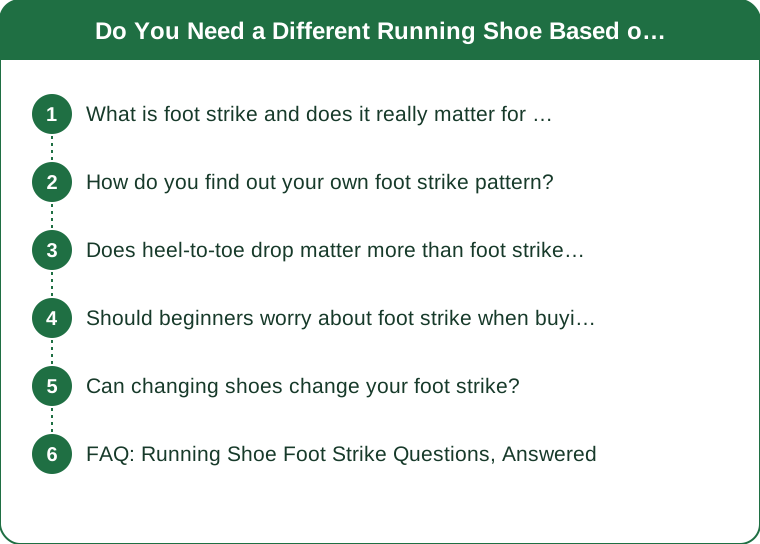
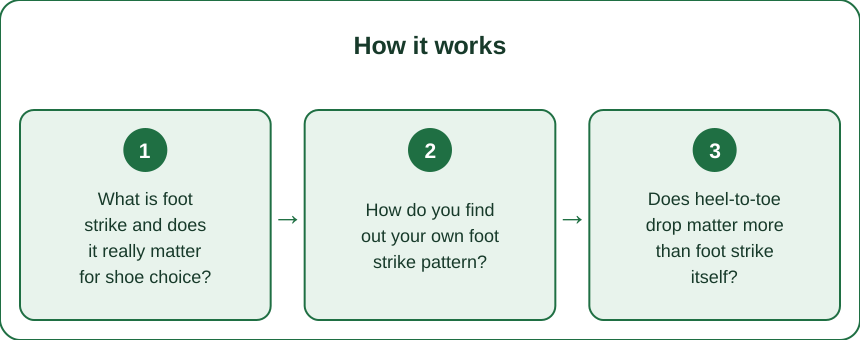
What is foot strike and does it really matter for shoe choice?
Foot strike refers to which part of your foot lands first while running — heel, midfoot, or forefoot. It matters somewhat for shoe choice because heel strikers typically benefit from more cushioning at the heel, while forefoot strikers often prefer a lower heel-to-toe drop that doesn’t force an awkward transition. That said, most runners fall somewhere in between and don’t need a highly specialized shoe.
How do you find out your own foot strike pattern?
The simplest way is to check the wear pattern on an old pair of running shoes — heavy wear concentrated at the back of the heel suggests heel striking, while wear concentrated toward the front suggests a forefoot pattern. Some running stores also offer treadmill gait analysis with slow-motion video, which gives a clearer picture than guessing.
Does heel-to-toe drop matter more than foot strike itself?
For most runners, yes — drop (the height difference between heel and forefoot cushioning) affects comfort and injury risk more directly than foot strike pattern alone. A drop of 8-10mm is a common middle ground, while lower drops (0-4mm) suit forefoot or midfoot strikers who want a more natural foot position throughout the stride.

Should beginners worry about foot strike when buying shoes?
Not excessively — for new runners, general fit, adequate cushioning, and choosing a shoe that matches your usual running surface matters more than dialing in foot-strike-specific features. Foot strike pattern is something more relevant to fine-tuning shoe choice after you’ve been running consistently for a while and have a sense of your natural gait.
Can changing shoes change your foot strike?
To a limited degree, yes — shoes with less heel cushioning can nudge some runners toward a more midfoot or forefoot strike since heavy heel-striking feels less comfortable without cushioning to absorb it. But foot strike is also influenced by running speed, terrain, and natural biomechanics, so shoes alone won’t dramatically override your default pattern.
FAQ: Running Shoe Foot Strike Questions, Answered
Is forefoot striking automatically better than heel striking?
No — research hasn’t shown one pattern to be definitively safer or more efficient than the other for all runners; the better approach is whatever feels sustainable and pain-free for your specific body.
Do minimalist shoes force forefoot striking?
They tend to encourage it due to reduced heel cushioning, but transitioning too quickly to minimalist shoes without building up calf and foot strength can increase injury risk.
Should I change shoes if I have no pain at all?
If you’re pain-free and performing well, foot strike optimization is a minor consideration — don’t fix what isn’t broken just because of a shoe trend.
TL;DR:
- Foot strike matters, but overall fit and cushioning matter more for most runners
- Check old shoe wear patterns to identify your natural strike
- Heel-to-toe drop is often a bigger comfort factor than strike type
- Don’t overhaul shoe choice based on foot strike if you’re currently pain-free
Foot strike is one piece of the running shoe puzzle, not the whole picture — fit and comfort should still lead the decision.
Keep Reading
This article is for general informational and styling purposes only. Fit, sizing, and product availability may vary.