The Sneaker Spa: Cleaning Every Material Without Ruining Anything
Quick Answer: There’s no single sneaker cleaning method — the technique that revives mesh will destroy suede. Mesh and knit: dry-brush first, then mild soapy water and a soft brush. Leather: damp wipe weekly, never soak, never machine. Suede: dry cleaning only, brush and eraser block, water is the enemy. Universal law for every material: air dry, stuffed with paper, never near a radiator or in a dryer.
Most sneaker cleaning advice fails at the first step, because it treats every shoe as one material.
The scrub that revives a mesh runner will flatten a suede nap permanently. The machine cycle that one pair survives will delaminate the next one. And the person who ruined a good pair of suede sneakers was almost always following instructions written for canvas.
Here’s the manual, material by material.
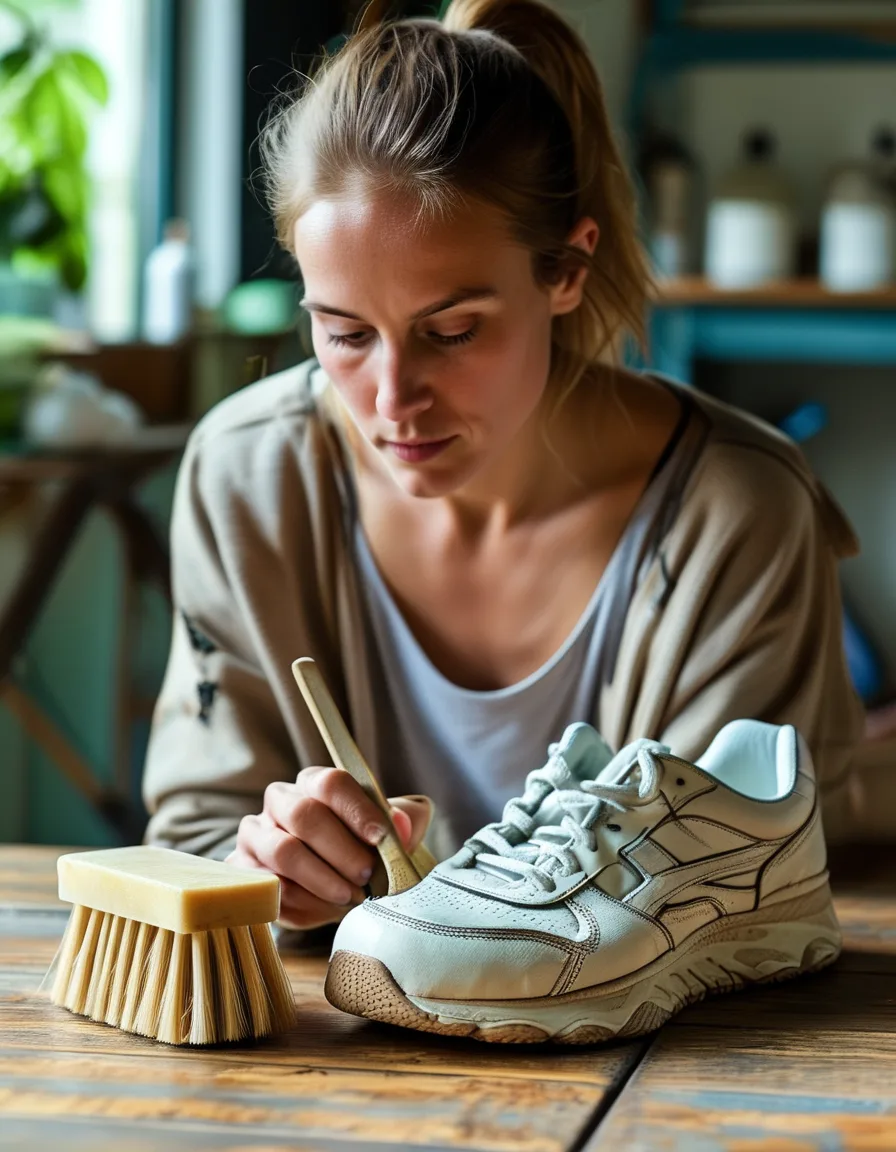

How Do You Clean Mesh and Knit Sneakers?
Gently, and dry before wet — that order is the whole trick.
- Dry-brush first. A soft brush lifts dried dirt out of the weave. Add water first and you smear that same dirt into the fibers, where it sets. This single step is what separates a clean-looking result from a grey one.
- Mild soapy water, a soft brush, small circles. Dish soap or a dedicated sneaker cleaner, well diluted. Don’t saturate — a damp brush, not a wet one.
- Rinse with a damp cloth, wiping the soap away rather than running the shoe under a tap.
- Air dry stuffed with paper. Paper towel or newspaper holds the shape while it dries and pulls moisture out of the interior. Knit uppers especially will slump into a new shape if they dry empty.
On machine-washing knit runners: it’s survivable — gentle cycle, cold water, inside a pillowcase or mesh bag, laces and insoles removed, air dry afterward. But it’s delamination roulette. The adhesives holding midsole to upper don’t love agitation and warm water, and the failure isn’t visible until the sole starts peeling three weeks later. For a pair you actually care about, hand cleaning wins.
What’s the Routine for Leather Sneakers?
A two-minute weekly ritual, and white leather lives or dies by it.
Damp cloth, mild soap only where it’s needed, then dry immediately — leather doesn’t want to sit wet. That’s the whole weekly maintenance.
A melamine sponge (magic eraser) on the rubber midsoles is this shoe’s single most transformative move. Grey, scuffed midsoles are what make white leather sneakers look finished; 90 seconds with a damp melamine sponge resets them completely. This is the eraser’s true calling.
Conditioner occasionally on premium leather pairs — every couple of months, or when the leather starts looking dry. Leather cracks when it dries out, and creases at the toe box become permanent.
Never the machine. Leather warps and stiffens, and structured sneakers lose their shape. Never soak for the same reason.

Why Is Suede Different From Everything Else?
Because suede rewrites every rule on this page, and the first rule is: water is the enemy.
Dry cleaning only.
- A suede brush — brass or nylon bristles — worked in one direction to lift and reset the nap.
- A suede eraser block for marks and shiny spots. Rub gently, then brush again.
- A protector spray is the actual strategy. Suede care is roughly 80% prevention: spray a new pair before the first wear, then every few months. Once suede is stained it’s a much harder problem.
If a suede pair gets rained on: let it dry completely and naturally, away from heat, stuffed with paper — then brush. Rubbing or brushing wet suede mats the nap, and matted nap doesn’t come back.
The general principle: with suede you are always working dry, always gently, and always after the fact rather than during.
The Deep Clean: The Parts Everyone Skips
Three extras that do more than another pass over the upper.
Laces come out and get washed separately. Soak in warm soapy water, or run them through a wash in a mesh bag. Grey laces make a clean shoe look dirty, and they’re the cheapest thing to replace — a fresh set is a four-dollar facelift on any pair.
Insoles out and aired. This is the odor’s actual address, and nobody looks there. Pull them out after every heavy wear, air them overnight, and for a committed fix, sprinkle baking soda inside the shoe and leave it overnight before shaking it out.
The drying law, universal to every material: never a radiator, never a dryer, never direct sun. Heat warps midsoles, cracks leather, and unglues adhesives. Always air, always at room temperature, always stuffed with paper. It takes 24 hours and it saves the shoe.

5 Mistakes Everyone Makes Cleaning Sneakers
- Wetting before brushing. Turns surface dirt into a stain in the weave. Dry-brush first, every time.
- Using bleach on white sneakers. It yellows synthetic materials over time and degrades the fibers. Diluted mild soap, or a dedicated whitener, does the job without the long-term damage.
- Machine-washing anything leather, suede, or structured. Canvas and some knits, at a push. Nothing else.
- Drying on a radiator. The single most common way a cleaned shoe ends up worse than a dirty one.
- Cleaning the upper and ignoring the sole. The midsole is what reads as “dirty shoe” from six feet away. Do the melamine sponge pass first if you only have two minutes.
Clean sneakers read as new sneakers from six feet. The full spa costs about twenty minutes and postpones a replacement by months.
Frequently Asked Questions
Can you put sneakers in the washing machine?
Canvas usually yes; knit runners at your own risk; leather, suede, and structured sneakers no. If you do machine-wash: cold water, gentle cycle, mesh bag or pillowcase, laces and insoles removed, and air dry afterward — never the tumble dryer, which is what actually destroys most machine-washed shoes.
How do you get yellow stains out of white sneakers?
Yellowing is usually oxidation of the rubber midsole, or soap residue left from a previous cleaning that dried in. Rinse thoroughly after any wash to prevent the second cause. For oxidized midsoles, a melamine sponge helps with surface grime, and dedicated sole-whitening products exist — but heavily oxidized rubber often can’t be fully restored.
How often should you clean sneakers?
A 30-second wipe after any wear that got them dirty, a proper clean every couple of weeks for a pair in regular rotation, and a full deep clean — laces, insoles, uppers, soles — every few months. Rotating between two pairs cuts all of this roughly in half and extends both pairs considerably.
TL;DR:
- No universal method — mesh, leather, suede, and canvas each need different handling.
- Mesh and knit: dry-brush first, then mild soapy water and a soft brush. Machine is a gamble.
- Leather: damp wipe weekly, condition occasionally, melamine sponge on midsoles, never soak.
- Suede: dry only. Brush, eraser block, protector spray. Never rub it wet.
- Laces washed separately or replaced; insoles out and aired for odor.
- Air dry stuffed with paper. Never a radiator, dryer, or direct sun.
Keep Reading
This article is for general informational and styling purposes only. Fit, sizing, and product availability may vary.