Why Sneaker Cushioning Wears Out Long Before the Outsole Shows Any Damage
Quick Answer: Outsole rubber is far harder and slower-wearing than the foam inside the midsole, so tread can look nearly new while the cushioning is finished. Most cushioned running and walking shoes lose meaningful shock absorption between 300 and 500 miles. Track mileage and press your thumb into the midsole to check rebound — tread appearance tells you almost nothing.
You pick up your shoes, flip them over, and the tread looks basically fine. A little smoothing at the outer heel, nothing dramatic. Clearly plenty of life left.
Meanwhile your shins have been quietly filing complaints for three weeks.
The shoes are done. They just didn’t tell you in the language you were checking.

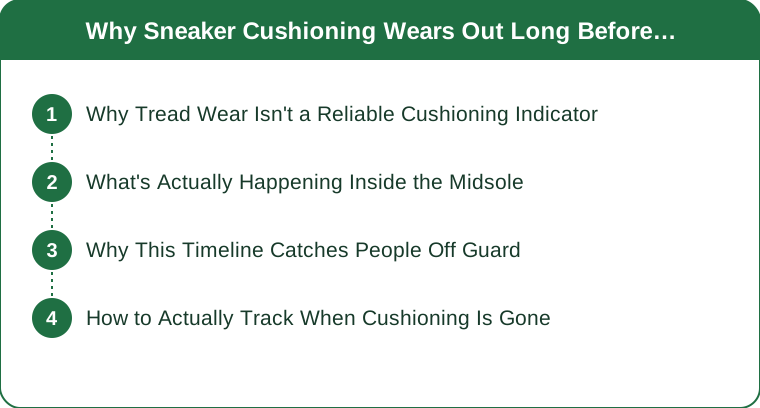
Why Doesn’t Tread Wear Tell You When a Shoe Is Finished?
Because you’re inspecting the wrong material.
The outsole — the rubber on the bottom — is a hard, abrasion-resistant compound designed to survive friction against pavement. It’s built to last, and it does.
The midsole is a completely different substance: a foam, full of tiny gas-filled cells, sitting between the outsole and your foot. That foam is what actually absorbs impact, and it fails by an entirely different mechanism.
Rubber wears down by scraping. Foam wears out by compressing. One is visible from the outside; the other isn’t visible at all.
So a shoe can look barely used from underneath while the part doing all the protective work has already given up. The outsole outlives the midsole in almost every cushioned shoe, which means the thing you can see is the thing that matters least.
What’s Actually Happening Inside the Midsole?
Every footstrike squashes the foam’s cell structure and then lets it spring back. That spring-back is the cushioning — the foam absorbing force and returning some of it.
Over thousands of repetitions, the cell walls fatigue. They stop rebounding fully. The foam gets progressively denser and less springy, until eventually it’s doing much more compressing than returning.
This is a cumulative impact process, not a friction process. It’s driven by how many times the shoe has been loaded and how hard, not by how much surface has been scraped off.
A few consequences worth knowing:
- Heavier runners and harder surfaces compress foam faster at the same mileage.
- Foam recovers slightly with rest, which is why rotating two pairs tends to extend the life of both.
- Different foams age differently. The very soft, high-stack “super foams” often feel spectacular and lose their bounce sooner than a firmer traditional EVA midsole.

What’s the Actual Mileage Timeline?
Most cushioned running and walking shoes lose a meaningful share of their shock absorption somewhere between 300 and 500 miles.
That’s a wide range because the variables are real: your weight, your gait, whether you run on asphalt or trail, how firm the foam was to begin with, and how humid your storage situation is.
The reason this catches people off guard is that at 400 miles, the tread on many shoes still looks perfectly serviceable. Outsole rubber routinely lasts well past the point where the midsole is finished. You’d have to run considerably further to wear through the rubber, and by then you’ve been running on a flat shoe for months.
For a rough sense of timing: 20 miles a week gets you to 400 miles in about five months. Walking shoes, worn daily for commuting and errands, hit similar cumulative impact numbers faster than people assume.
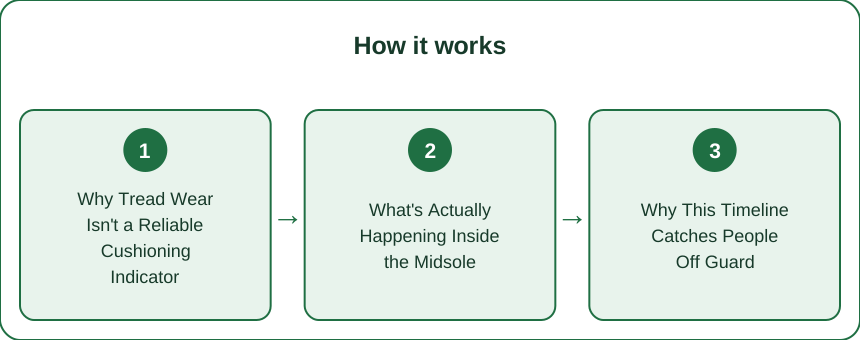
What Nobody Tells You About Replacing Shoes
Your body notices before you do. New, unexplained shin, knee or foot soreness — particularly if it started gradually and correlates with nothing else — is often the first real signal. People routinely attribute it to training load and change their program when they should have changed their shoes.
The thumb test works and takes three seconds. Press your thumb firmly into the midsole foam along the side of the shoe. Fresh foam gives, then springs back. Spent foam feels dense, flat, and stays compressed a beat too long. Compare a suspect shoe against a new one and the difference is obvious.
Look at the midsole from the side, not the sole from below. Visible creasing, wrinkling or compression lines along the foam — especially concentrated on one side — mean it’s been squashed past recovery.
Storage counts as aging. Foam degrades slowly on its own, particularly in heat. A pair sitting in a closet for four years is not new, regardless of mileage, and a shoe left in a hot car repeatedly ages faster.
Rotating two pairs is genuinely cost-neutral or better. Because foam partially recovers between wears, two pairs alternated often deliver more total useful miles than the same two pairs worn out sequentially. You also get to notice the difference between them, which is the best early-warning system there is.
“They still feel fine” is unreliable. The change happens over months, and you adapt to it gradually. That’s exactly why an objective mileage log beats your subjective impression.
How Should You Track It?
- Log the mileage. Most running apps let you assign a shoe to a run and total it automatically. For walking or gym shoes, note the purchase date and estimate.
- Set a check-in point at 250-300 miles. Don’t wait for a problem; start paying attention early.
- Do the thumb test monthly past that point.
- Buy the replacement before you need it, and rotate the new pair in gradually rather than switching cold on a long run.
- Retire, don’t discard. A shoe that’s finished for running is often perfectly good for errands and casual wear — just not for impact.
When to see a professional: persistent pain that doesn’t resolve after replacing worn shoes deserves a proper look rather than another purchase. Ongoing shin, knee, heel or foot pain, pain that’s sharp rather than achy, or pain that’s worsening are reasons to see a physical therapist or sports medicine doctor. If you have diabetes, neuropathy or any condition affecting foot sensation, don’t rely on how the shoe feels — cushioning loss is harder to detect and the consequences are more significant, so use mileage and a professional’s input instead.
FAQ
How many miles do running shoes last?
Most cushioned running shoes are considered done between 300 and 500 miles, depending on your weight, running surface and the foam used. Very soft high-stack foams can lose their bounce toward the lower end of that range; firmer traditional midsoles often stretch toward the upper end.
How can I tell if my shoe cushioning is gone?
Press your thumb hard into the side of the midsole — good foam compresses and springs back, worn foam feels dense and flat. Also look for creasing or wrinkling along the midsole from the side, and pay attention to new aches in your shins, knees or feet that don’t have another explanation.
Should I replace shoes even if the tread looks fine?
Yes, in most cases. Outsole rubber routinely outlasts midsole foam by a wide margin, so tread appearance is a poor indicator. Mileage and the thumb test give you far more useful information than looking at the bottom of the shoe.
TL;DR
- You’re checking the wrong material. Rubber wears by scraping; foam wears by compressing, invisibly.
- 300-500 miles is the typical window for meaningful cushioning loss in a cushioned shoe.
- The thumb test: press into the midsole. Fresh foam springs back, spent foam stays flat.
- New unexplained shin, knee or foot aches are often the first real signal.
- Rotate two pairs — foam partially recovers between wears, so both last longer.
- Track mileage from day one. Your subjective impression adapts too gradually to be trusted.
Keep Reading
This article is for general informational and styling purposes only. Fit, sizing, and product availability may vary.