Your Sneaker's Midsole Is Compressing Faster Than You Think — Here's the Real Timeline
Quick Answer: Most foam midsoles lose 30-40% of their cushioning by 300-500 miles or roughly 6-8 months of regular wear, well before the outsole tread looks worn out. Judge shoe life by mileage and cushioning feel, not visible wear.
The outsole still has plenty of tread, so the shoes “look fine.” But your knees have started aching on the same runs that felt easy two months ago — that’s the midsole quietly giving out underneath a sole that hasn’t caught up visually.

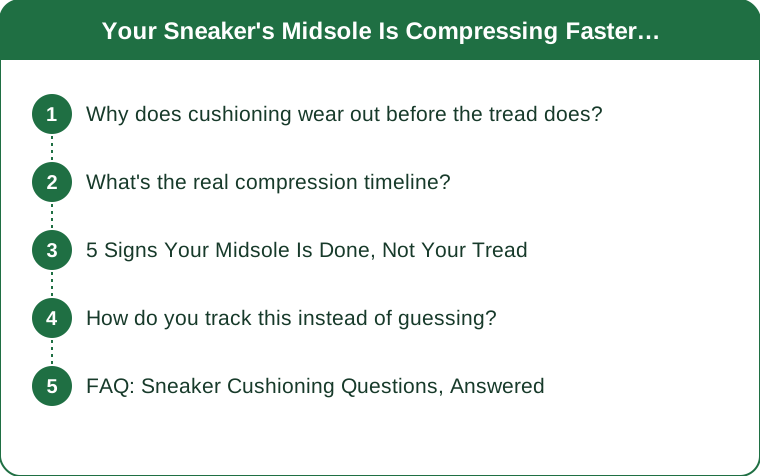
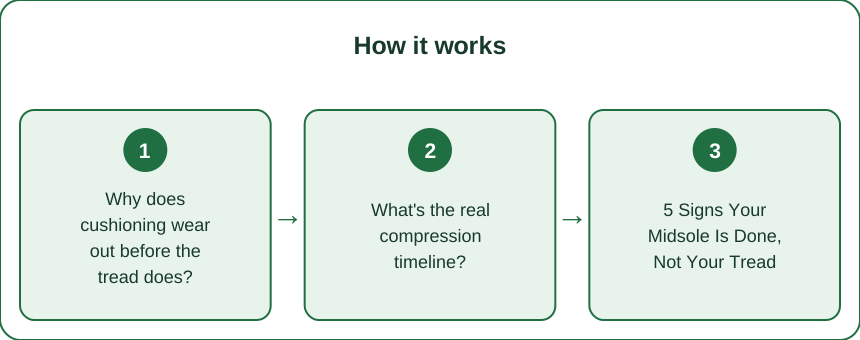
Why does cushioning wear out before the tread does?
Foam midsoles compress through repeated impact loading, and that compression is invisible from the outside — it happens in the cell structure of the foam, not on the surface you can see.
Outsole rubber, by contrast, wears down slowly and visibly from friction. The two wear out on completely different timelines, which is why a shoe can look barely used while feeling flat underfoot.
What’s the real compression timeline?
Studies on EVA and similar foams show a 30-40% cushioning loss by around 300-500 miles, with the steepest drop happening in the first 150 miles as the foam cells initially collapse and never fully recover.
For someone walking or training rather than running, translate that to roughly 6-8 months of regular daily wear as the point cushioning meaningfully declines.

5 Signs Your Midsole Is Done, Not Your Tread
1. New shin or knee soreness on routes that used to feel fine.
2. The shoe feels flat when you press your thumb into the midsole compared to a same-model new pair.
3. Visible creasing or compression lines across the foam when the shoe is off your foot.
4. You’re reaching for a different pair without consciously deciding to.
5. The insole shifts or feels loose — often a sign the foam beneath it has settled unevenly.
How do you track this instead of guessing?
Write the shoe’s start date on the inner tongue with a marker, or log mileage in a running app if you track runs. At 250-300 miles, start paying attention to feel; by 400-500, plan a replacement regardless of tread appearance.
Rotating two pairs also slows the rate of compression per pair, since foam gets recovery time between wears.
FAQ: Sneaker Cushioning Questions, Answered
Can compressed foam recover if I stop wearing the shoes?
Partially, with rest — foam regains some bounce over days of non-use, which is the main benefit of rotating shoes. Full compression from age or heavy mileage doesn’t reverse.
Does walking wear out cushioning slower than running?
Yes, meaningfully — walking impact forces are lower, so the same foam lasts roughly 2x longer in miles for walking versus running.
Is a firmer midsole always more durable?
Generally yes — firmer foams compress more slowly but feel less plush initially. It’s a trade-off between immediate comfort and longevity, not a simple better-or-worse.
TL;DR:
- Midsole cushioning drops 30-40% by 300-500 miles — well before tread looks worn
- New soreness on familiar routes is often the first real signal, not the tread
- Mark your shoe’s start date and track mileage instead of judging by looks
- Rotating two pairs gives foam recovery time and slows compression per pair
Check the feel and the mileage, not just the tread — that’s where sneakers actually die first.
Keep Reading
This article is for general informational and styling purposes only. Fit, sizing, and product availability may vary.