Why New Sneakers Start Smelling Bad After Just a Few Wears
Quick Answer: Sneaker odor develops fast mainly from trapped moisture feeding bacteria inside the shoe, not from the shoe itself being dirty — rotating pairs so each has 24-48 hours to fully dry, plus moisture-wicking socks, prevents most odor before it starts.
They’re brand new. You’ve worn them maybe five times. And they already smell like they’ve seen years of use.
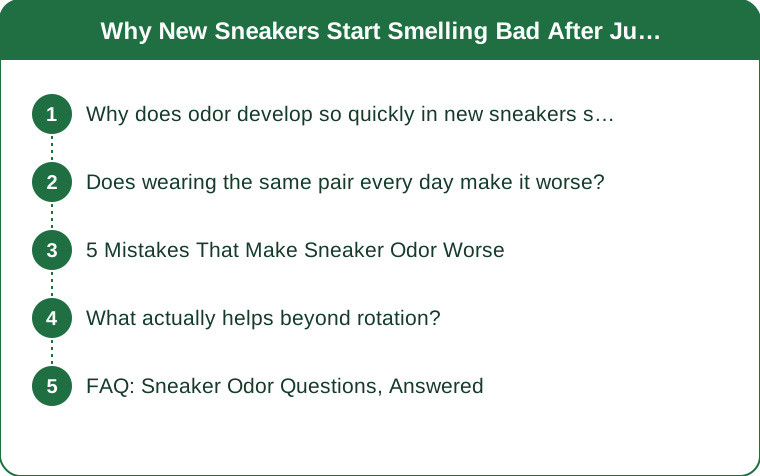
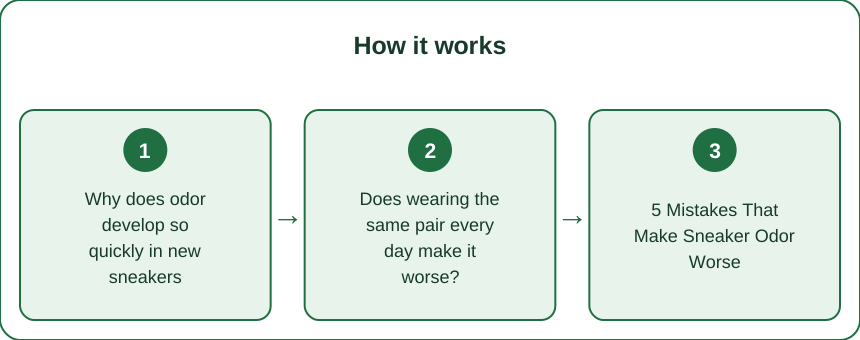
Why does odor develop so quickly in new sneakers specifically?
New sneaker materials, especially synthetic mesh and foam insoles, often trap moisture more than broken-in leather or canvas does, creating a warm, damp environment that bacteria feeding on sweat and skin cells thrive in. The odor isn’t from the sneaker material itself — it’s a byproduct of bacterial activity, which explains why it can develop within just a handful of wears in the right (or wrong) conditions.
Feet have a high concentration of sweat glands, and a shoe that doesn’t fully dry out between wears gives bacteria a continuous head start rather than resetting the moisture level each time.
Does wearing the same pair every day make it worse?
Yes, significantly — a sneaker typically needs 24-48 hours to fully dry out internally after a day of wear, and if you put them back on before that drying period completes, moisture (and the bacteria feeding on it) never gets a chance to reset. Wearing the same pair daily essentially compounds moisture buildup day after day without a real recovery window.
Rotating between at least two pairs, even just alternating every other day, is one of the single most effective changes for reducing odor, more impactful for many people than any specific cleaning product.
5 Mistakes That Make Sneaker Odor Worse
- Wearing the same pair daily without a drying rotation
- Skipping moisture-wicking socks, wearing cotton that holds sweat against skin
- Storing shoes in a closed, unventilated closet or bag right after wearing
- Not removing insoles to dry separately, since insoles hold the most moisture
- Masking odor with spray instead of addressing moisture, which doesn’t solve the underlying bacterial cause
What actually helps beyond rotation?
Moisture-wicking socks (synthetic blends or merino wool, rather than pure cotton) keep sweat from saturating the shoe as much in the first place. Removing insoles after wearing and letting them air out separately dries the most moisture-heavy part of the shoe faster than leaving them in place.
Cedar shoe trees or a simple baking soda sprinkle overnight both help absorb residual moisture and odor between wears, though neither replaces the core fix of giving shoes real drying time between uses.
FAQ: Sneaker Odor Questions, Answered
How long does it actually take for a sneaker to fully dry out?
Usually 24-48 hours in normal room conditions; a fan or well-ventilated spot speeds this up.
Do odor-eliminating insoles actually work?
They can help manage odor, but they work best alongside proper drying and rotation, not as a standalone fix for a shoe that never gets time to dry.
Is foot odor a hygiene problem or just biology?
It’s mostly biology — sweat and bacteria are normal, and moisture management matters more than how clean your feet are to begin with.
TL;DR:
- Odor comes from bacteria feeding on trapped moisture, not dirt itself
- Sneakers need 24-48 hours to fully dry — daily wear without rotation compounds moisture
- Moisture-wicking socks reduce how much sweat saturates the shoe
- Removing insoles to air out separately dries the most moisture-heavy part faster
If you’ve only got one pair in rotation, that’s likely the single biggest factor — even alternating with an old backup pair makes a noticeable difference within a week or two.
Keep Reading
This article is for general informational and styling purposes only. Fit, sizing, and product availability may vary.