Why New Sneakers Feel Tight Across the Top (Even in Your Normal Size)
Quick Answer: Tightness specifically across the top of the foot (the instep) usually means the shoe’s volume doesn’t match your foot’s height, not its length or width — common with higher-arched or higher-volume feet. Lacing technique fixes it in many cases; sizing up rarely does.
You tried your normal size, the length and width feel right, but there’s a specific pressure line across the top of your foot by the laces. That’s a volume mismatch, and it’s more common — and more fixable — than people realize.
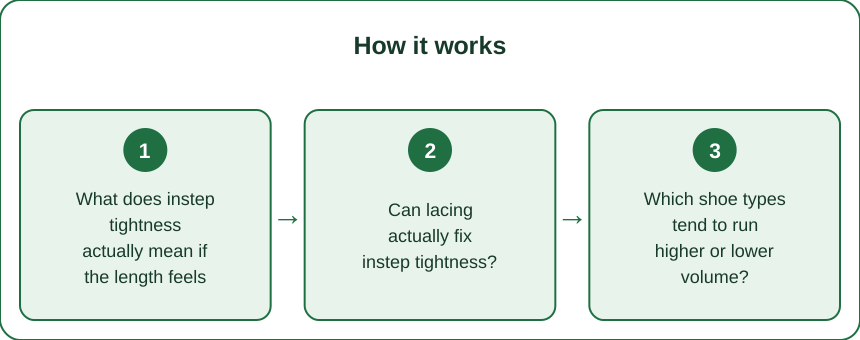
What does instep tightness actually mean if the length feels right?
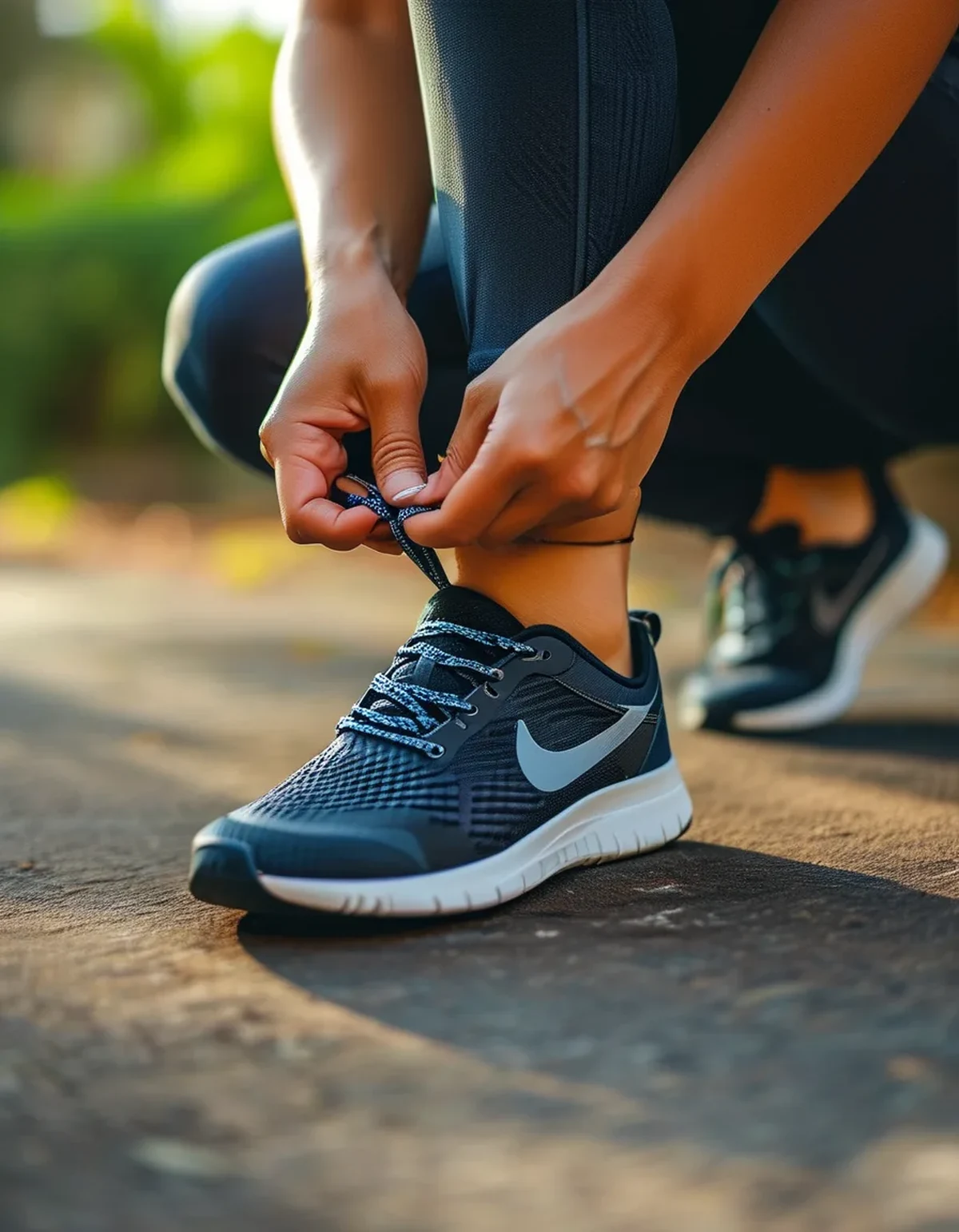
Shoes have three dimensions that matter: length, width, and volume (foot height/instep). Most people only check length and assume fit is solved, but a higher-volume or higher-arched foot needs more room from top to bottom, not side to side or front to back — and that’s exactly the pressure you’re feeling.
Sizing up doesn’t fix this because it adds length, not instep room — you’d just end up with a longer shoe that’s still tight on top, plus extra room at the toe you didn’t need.
Can lacing actually fix instep tightness?
Often, yes — significantly. A skip-lace or ladder-lace technique, where you skip one eyelet directly over the tightest point, redistributes pressure around that spot instead of across it. This is a genuinely effective first fix before assuming you need different shoes entirely.
Search “skip lacing” or “window lacing” for the specific pattern — it takes about 30 seconds to relace once you know it, and it’s reversible if it doesn’t help.
Which shoe types tend to run higher or lower volume?
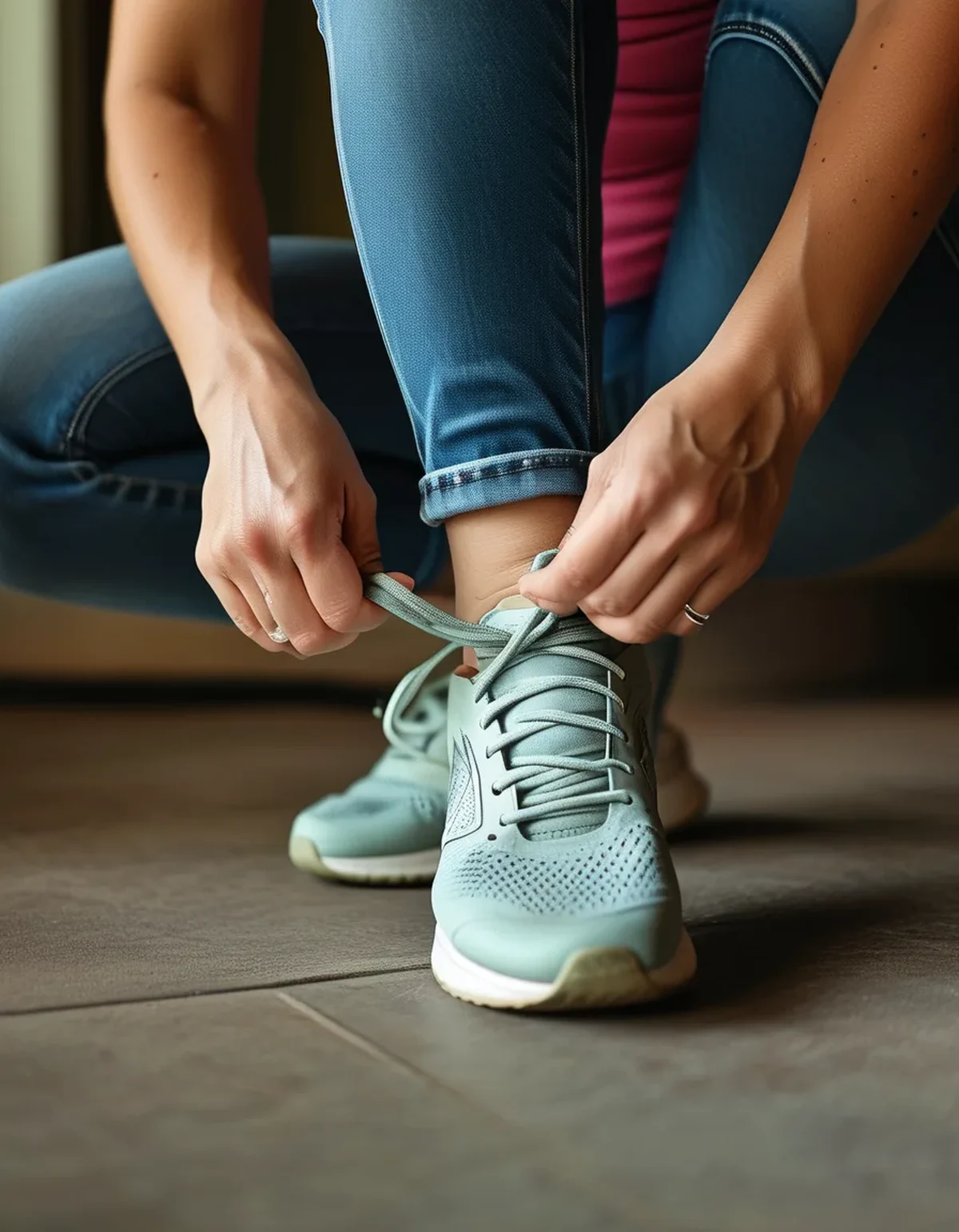
Running shoes and athletic sneakers generally run higher volume (more room over the top of the foot) than fashion sneakers or minimalist styles, which are often cut lower and closer to the foot. Brands with more structured, layered uppers (extra overlays, reinforced panels) tend to run tighter across the instep than simple mesh uppers, even in the same size.
If you consistently feel instep pressure across multiple brands, it’s worth specifically shopping product descriptions or reviews that mention “roomy instep” or “high volume fit” rather than relying on size alone.
Does this get better with break-in, or is it a sign to return the shoe?
Mild pressure that eases within the first few wears is normal break-in — most uppers have some give, especially in mesh or knit materials. Sharp, unchanging pressure, numbness, or a pinch that doesn’t budge after a week of short wears is a sign the shoe’s volume genuinely doesn’t match your foot — that one’s worth returning rather than pushing through.
A useful test: wear the shoe around the house for 15-20 minutes at a time over a few days before committing to a long walk or run in them — this reveals the difference between temporary stiffness and a real fit mismatch.
FAQ: Sneaker Instep Fit Questions, Answered
Do insoles make instep tightness worse?
Sometimes — thick aftermarket insoles raise your foot higher inside the shoe, which can increase pressure on an already tight instep. If you’re using one, try the shoe without it first to isolate the cause.
Are high-arched feet always higher volume?
Often, but not always — arch height and foot volume are related but not identical; some flatter feet are still naturally higher volume through the midfoot.
Does a half-size up ever help instep tightness?
Rarely on its own, but combined with skip-lacing it can give slightly more overall room — treat sizing up as a secondary tweak, not the main fix.
TL;DR:
- Top-of-foot tightness is a volume mismatch, not a length or width problem
- Skip-lacing over the tight spot is the most effective quick fix
- Athletic and mesh-upper shoes tend to run higher volume than structured fashion sneakers
- Unchanging sharp pressure after a week of short wears means the shoe’s volume doesn’t fit, not that it needs more break-in
Instep pressure has a specific, fixable cause most people never think to check — it’s rarely about needing a whole size up.
Keep Reading
This article is for general informational and styling purposes only. Fit, sizing, and product availability may vary.