Why Rotating Two Pairs of Sneakers Makes Both Last Longer
Quick Answer: Midsole foam compresses with every step and needs roughly a day to decompress fully; worn daily, it operates permanently squashed and fatigues faster. Add the moisture a day of wear leaves inside — which softens glues and materials — and daily wear ages a shoe faster per mile than alternated wear. Two pairs in rotation genuinely deliver more total miles than the same two pairs worn one after the other, plus a recovery day for the shoe, drier interiors, and slightly varied stress on your feet and joints.
The second pair is not indulgence. It is maintenance you happen to wear.

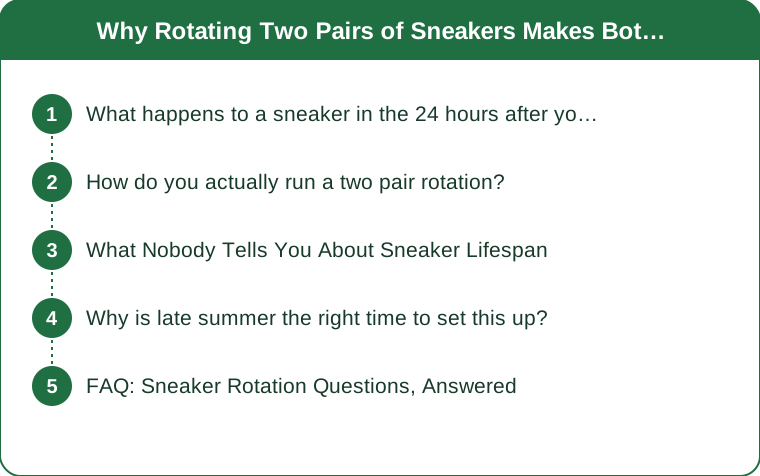
What happens to a sneaker in the 24 hours after you wear it?
Two recovery processes, both invisible, both routinely interrupted by daily wear.
The first is foam decompression. Midsole foams — EVA and its descendants — cushion by compressing millions of tiny air cells with each step, and those cells re expand slowly afterward. Take the shoes off after a long day and the foam is measurably thinner and firmer than it was that morning. Given a full day off, it recovers most of its loft. Worn again immediately, it starts the day pre compressed — cushioning less, transmitting more impact, and taking on a little more of the permanent, unrecoverable flattening that eventually kills every midsole.
A shoe worn every single day spends its whole life in that squashed state, which is why daily wear ages foam faster per mile than alternated wear. The rest day is when the shoe repairs itself.
The second process is drying. Feet release a genuinely surprising amount of moisture across a day, and most of it ends up in the shoe’s lining, insole, and foam. Damp materials break down faster — adhesives soften, linings abrade, foam degrades — and a damp interior is also the habitat odor bacteria are waiting for. A shoe needs a day to dry fully from the inside, and daily wear never grants it.
Neither process shows on the outside. The upper looks identical either way, which is why the whole subject feels like shoe industry mythology right up until you feel the difference between a rested pair and a flattened one on the same afternoon.
How do you actually run a two pair rotation?
Start the second pair while the first is mid life, alternate by day, and let each pair have a specialty if that suits your week.
Do not wait for pair one to die. The classic pattern — wear one pair to destruction, then start fresh — means you spend the last two months walking on dead foam without noticing, because the decline was gradual. Overlapping pairs gives you a live comparison: the day the old pair suddenly feels flat against the new one is the day you know. It is the most reliable replacement signal there is.
Alternate simply. Strict every other day works; so does workout pair versus everything else pair. What matters is that no pair works consecutive long days.
Split by job if your days differ. A cushioned pair for the long walks and workouts, and a second pair for errands and standing days, means the hard miles always land on rested foam. The low intensity days — the coffee run in leggings, the school pickup loop — become the recovery shift for whichever pair worked yesterday.
Store them somewhere they can actually dry. Open air beats the closet floor pile, and pulling the insoles out after a soaked or sweaty day speeds everything. Never dry sneakers on a radiator or in a dryer — heat is how glue dies.
Track loosely. Foam retires somewhere around 300 to 500 miles of real use, or roughly six to twelve months of regular wear. Nobody needs a spreadsheet; a note of the month each pair entered service is plenty.
The budget math settles the objection: two pairs bought over time and rotated cost the same per month as sequential pairs — and deliver more comfortable miles for it.

What Nobody Tells You About Sneaker Lifespan
The midsole dies long before the shoe looks dead. Uppers are durable; foam is not. A shoe can be cosmetically respectable and functionally finished — the tell is new aches after ordinary days, flatness underfoot, or visible compression wrinkles along the midsole wall.
Foam ages on the shelf, not just underfoot. The materials stiffen slowly with time regardless of wear, so stockpiling four pairs of a beloved discontinued model means the last pair debuts middle aged. Buy ahead by one, not by four.
The washing machine is a shortcut to the graveyard. Hot water and tumbling attack adhesives and foam structure. Spot clean with a brush and mild soap, air dry stuffed with newspaper, and accept that sneakers are allowed to look lived in.
Rotation also spreads stress on you. Different shoes load feet and joints slightly differently, and there is decent evidence that varying footwear modestly across the week is associated with fewer overuse niggles than identical loading every day. Two different-but-both-comfortable pairs is a feature, not indecision.
Insoles flatten on their own schedule. If a mid life shoe feels tired, sometimes ten dollars of replacement insole buys a genuine second act — worth trying before retiring a structurally sound pair.
Yesterday’s shoe is detectable by feel. Once you rotate, put on the pair you wore for a long day yesterday and pay attention: slightly firmer, slightly flatter. That difference is what daily wearers walk on permanently — the entire argument, felt through your own feet in ten seconds.
Why is late summer the right time to set this up?
Because the sweat season is peaking, the walking season is coming, and the shoes for it should be broken in before it arrives.
August is maximum moisture. Hot days mean sweat soaked interiors even without workouts, which makes the drying day genuinely load bearing right now — a single pair worn through a humid week is damp by Wednesday and fragrant by Friday. If a rotation ever mattered, it is this month. Rinse-and-rotate also handles the other August input: sunscreen and bug spray residue on hands that end up on heel counters.
Fall is the year’s best walking weather, and it rewards preparation. Cooler mornings, walkable afternoons, holiday markets and stadium weekends on the horizon — foot mileage climbs for most people from September through November. Starting a second pair now means it is fully broken in before the high mileage season, instead of debuting stiff on the first crisp Saturday you want to walk five miles.
Sales cooperate. Late summer clearance is when current year models get discounted to make room, which is the natural moment to buy the rotation partner rather than paying full freight in October.
And a checkpoint worth doing today: examine your current pair’s tread and midsole. Smoothed heel edges and deep compression wrinkles now mean the pair has one season left at most — better to know in August than to discover it via aching knees in a leaf-covered October.
If foot pain persists regardless of footwear — heel pain on first steps, numbness, recurring blisters in one spot — that is podiatrist territory, and no rotation scheme substitutes for someone watching how you actually walk.
FAQ: Sneaker Rotation Questions, Answered
Do the two pairs need to be different models?
No — two of the same beloved shoe rotate fine and still gain the foam recovery and drying benefits. Slightly different models add the varied loading bonus and make the wear comparison easier, so mildly different is the ideal, identical is fine.
Does rotation apply to cheap sneakers too?
Yes, arguably more — budget foams tend to fatigue faster, so the recovery day buys proportionally more. The habit costs nothing either way.
How do I know for sure a pair is done?
Stack the evidence: compression wrinkles on the midsole wall, smoothed tread at the heel or forefoot, new aches after routine days, and flatness compared against your fresher pair. Any two together is the answer.
Is it bad to wear brand new sneakers for a long day right away?
Modern sneakers need less break in than older shoes, but a few short days first lets the upper settle to your foot before a ten hour outing. The rotation makes this painless — the new pair takes the short shifts for its first week.
TL;DR:
- Foam compresses through a day of wear and needs about 24 hours to recover; daily wear keeps it permanently squashed and ages it faster per mile.
- Interiors also need a full day to dry, and damp materials break down faster and smell sooner.
- Run two pairs, alternate days or jobs, start the second pair mid life of the first, and let the side by side feel tell you when to replace.
- Set it up now: August sweat makes drying days vital, clearance makes the second pair cheap, and fall walking season wants broken in shoes.
Check your current pair’s midsole for wrinkles tonight. If they are there, the rotation partner is not a future purchase — it is this month’s.
Keep Reading
This article is for general informational and styling purposes only. Fit, sizing, and product availability may vary.