Why Sneakers Never Feel the Same After They Get Soaked
Quick Answer: Water changes three things at once. Foam midsoles absorb water and lose some rebound, adhesives soften and can partially fail, and leather or synthetic uppers shrink and stiffen as they dry - especially if dried with heat. The upper is usually the permanent change: as it dries, the fibres draw tight and the shoe fits smaller and harder than it did. Drying slowly and with the shoe held in shape prevents most of it, but it has to happen immediately.
Here is what each part does and what actually salvages a soaked pair.
What happens to the midsole?
EVA foam is closed-cell and does not soak like a sponge, but it does absorb some water through the surface and any exposed cut edges. A saturated midsole is measurably heavier and feels dead underfoot.
Most of that recovers. Once fully dry, EVA generally returns close to its previous behaviour. The problem is that people run in them wet, which compresses foam that is temporarily weaker.
Repeated soaking is more damaging than one event. Each wet-dry cycle stresses the cell structure, and a shoe soaked weekly through an autumn ages faster than mileage alone would suggest.
Newer foams vary considerably. Some modern supercritical foams are more water-resistant; some absorb more. There is no single rule across brands, which is why one pair recovers and another does not.
And heat is what makes midsole damage permanent. A radiator, a hairdryer, or a hot car can soften and deform the foam, and that does not come back. This is the single most common way people finish off a wet pair - the drying, not the soaking.
Why does the upper feel tighter afterwards?
Leather shrinks as it dries. Water swells the fibres and, as it evaporates, they draw tighter than before and lose the natural oils that kept them supple. The result is a stiffer, smaller upper.
This is why leather trainers are the worst affected. A soaked-and-dried leather shoe can fit a half size smaller in effect, and it will crease in whatever shape it dried in.
Synthetic and knit uppers shrink far less but can stiffen where a coating or bonded overlay has been affected. Knit uppers generally recover well, which is a genuine advantage in wet climates.
Shape memory is the underrated part. A shoe dries into whatever shape it holds, so a pair left slumped on its side dries with a distorted toe box and stays that way.
And the insole is often the real culprit. Soaked foam insoles compress unevenly as they dry and can shrink, so the shoe fits differently because the thing inside it changed rather than the shoe. Replacing the insole fixes more post-soaking fit complaints than anything else.
Conditioning helps leather afterwards. Once fully dry, a leather conditioner restores some of the oils lost, which recovers a good part of the flexibility even if the size change does not fully reverse.
How should I actually dry them?
Remove the insoles and laces first, immediately. Both hold water and both slow the drying of everything else. Dry them separately and flat.
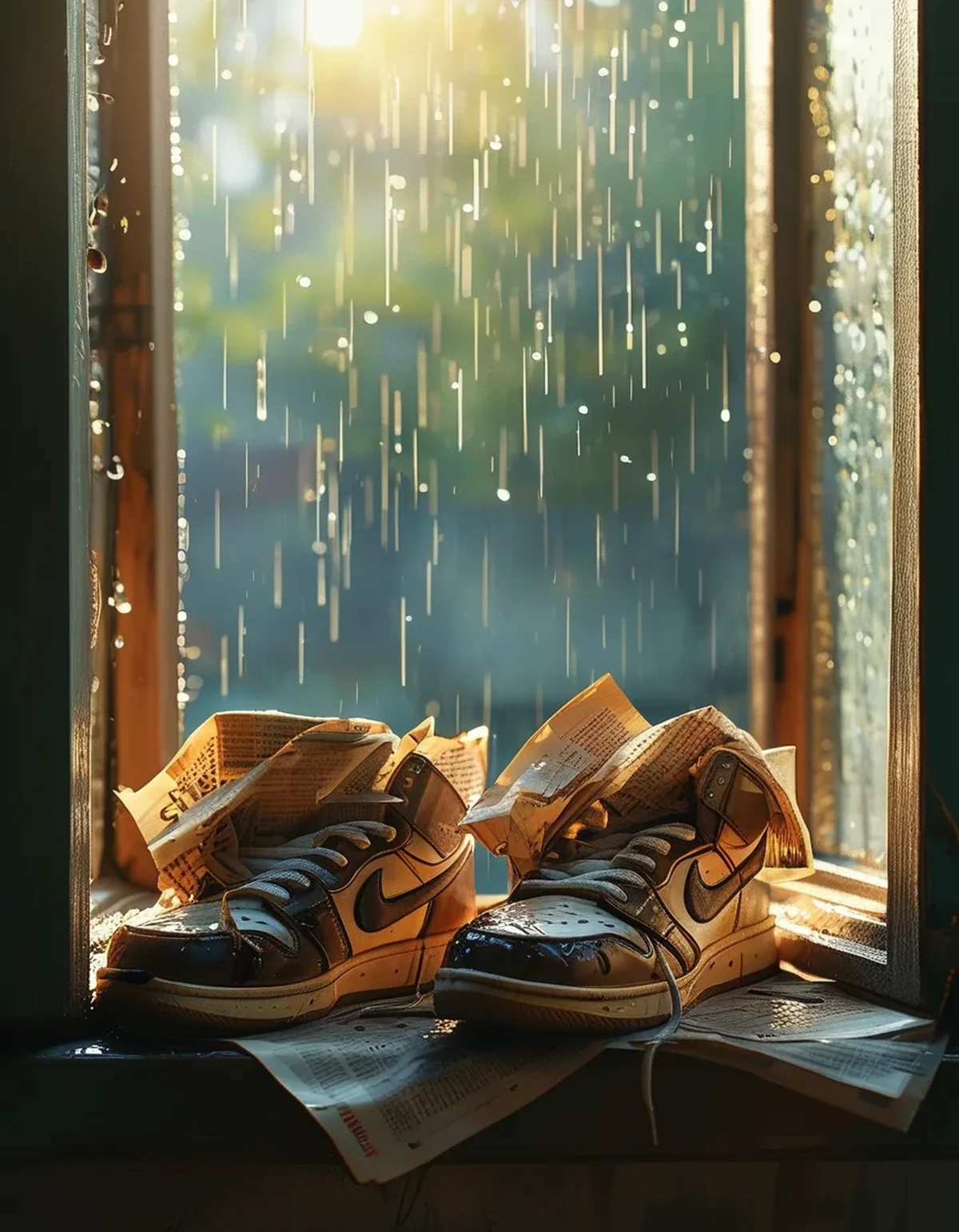
Stuff with newspaper or paper towel, changed after the first hour and then every few hours. The first change matters most - that paper is holding most of the water it will ever absorb.
Stuff enough to hold the shape, not so much that it stretches the upper. The point is shape retention as much as absorption, and this is what prevents the permanent distortion.
Room temperature, good airflow, no direct heat. A fan pointed at them is ideal. Radiators, hairdryers, tumble dryers, and hot cars are all how a recoverable soaking becomes permanent damage.
Expect 24 to 48 hours and do not wear them until fully dry, including the midsole. A shoe that feels dry on the surface is often still damp inside, and wearing it then re-compresses damp foam.
And a cedar shoe tree is genuinely worth it if you soak leather shoes regularly. It absorbs moisture and holds the shape at once - it is the single best-value item for anyone who walks in the rain.

What Nobody Tells You About Soaked Trainers
The smell is bacterial, and it starts within hours. Damp warm fabric is ideal for the bacteria that produce odour compounds. Drying fast is the actual odour prevention - deodorising a shoe that took three days to dry is treating the symptom.
Adhesive failure shows up weeks later, not immediately. Water-softened glue at the midsole-upper bond often holds until it is stressed repeatedly, so the separation appears a month after the soaking and gets blamed on something else.
Rotating two pairs matters far more in autumn than in summer. A shoe needs 24 to 48 hours to dry properly, so a single pair worn daily through a wet week never fully dries - and that is a much bigger factor in shoe lifespan than most people realise.
Washing machines are worse than rain. The agitation plus prolonged saturation plus heat stresses adhesives far more than any puddle. If you must, use a cold gentle cycle in a pillowcase and accept the risk.
And salt marks in winter are a separate problem. Road salt leaves a white tidemark that damages leather over time. Wipe with a solution of one part white vinegar to two parts water once dry, not while wet.
One genuinely useful preventive: a fluoropolymer-free water repellent spray applied before the wet season and refreshed monthly substantially reduces how much water gets in at all - and preventing the soaking is far more effective than any recovery method.
Can a badly dried pair be saved?
Partly, depending on which part changed. Leather that shrank can be softened with conditioner and stretched somewhat, but it will not fully return to its original dimensions.
Replacing the insole is the highest-value fix. A new insole costs a fraction of the shoe and resolves a large share of post-soaking fit complaints, because the insole is often what actually deformed.
Re-lacing changes the fit more than people expect. If the upper stiffened, a different lacing pattern redistributes the pressure and can make an uncomfortable pair wearable again.
A deformed midsole is not recoverable. If the foam melted or compressed asymmetrically from heat, the shoe is done for anything but light wear - and running in an asymmetrically compressed midsole is a genuine injury risk.
Check the bond line before writing them off. Press the upper away from the midsole all round; any gap means the adhesive has partially failed and it will spread.
And be honest about mileage. If a soaking finished off a pair with 600km on it, the water was the last straw and not the cause. Persistent foot or knee pain in old shoes is worth taking seriously rather than pushing through - see a professional if it does not settle. This is general information, not medical advice.
FAQ: Wet Sneaker Questions, Answered
Can I put wet trainers in the tumble dryer?
No. Heat deforms foam midsoles permanently and softens the adhesives holding the shoe together. This is the most common way a recoverable soaking becomes permanent damage.
Why do my shoes feel tighter after drying?
Leather fibres draw tight as they dry and lose their natural oils. Synthetic uppers do this far less. Often it is actually the insole that shrank rather than the shoe.
How long should they take to dry?
24 to 48 hours at room temperature with good airflow and paper changed regularly. Anything much faster usually means heat was involved.
Does the midsole recover?
Generally yes, if dried without heat. What does not recover is foam that was deformed by a radiator or hairdryer, or compressed by being worn while still wet.
How do I stop them smelling?
Dry them fast and fully - odour is bacterial and thrives in damp fabric. Remove the insoles to dry separately, and replace them if the smell persists after drying.
Is waterproofing spray worth using?
Yes, particularly before autumn. Preventing water getting in is far more effective than any recovery method, and it needs refreshing roughly monthly with regular wear.
TL;DR:
- Three things change at once: midsole foam absorbs water, adhesives soften, and the upper shrinks and stiffens as it dries.
- The upper change is usually the permanent one - leather draws tight and loses its oils. Knit uppers recover best.
- Heat is what makes it permanent. Radiators, hairdryers, and hot cars finish off more shoes than rain does.
- Insoles and laces out immediately, stuff with paper, change it after the first hour, room temperature with airflow, 24 to 48 hours.
- Replacing the insole fixes most post-soaking fit complaints - it is often what actually deformed.
- Rotate two pairs through a wet season. A shoe worn daily never fully dries.
Adhesive failure appears weeks later. Press the upper away from the midsole all round - any gap will spread.
Keep Reading
This article is for general informational and styling purposes only. Fit, sizing, and product availability may vary.