Why Your Sneakers Feel Different on a Treadmill Than Outside
Quick Answer: A treadmill belt is compliant, perfectly uniform, and moving under you, which changes three things: the surface absorbs some impact so your cushioning feels less necessary and therefore mushier, your stride tends to shorten and land differently, and there is no lateral variation at all, so the parts of the shoe that handle uneven ground never engage. Add a warmer, still environment and the fit changes as your feet swell more than they would outdoors.
The shoe is identical.
The surface, your stride and your foot volume are all different.
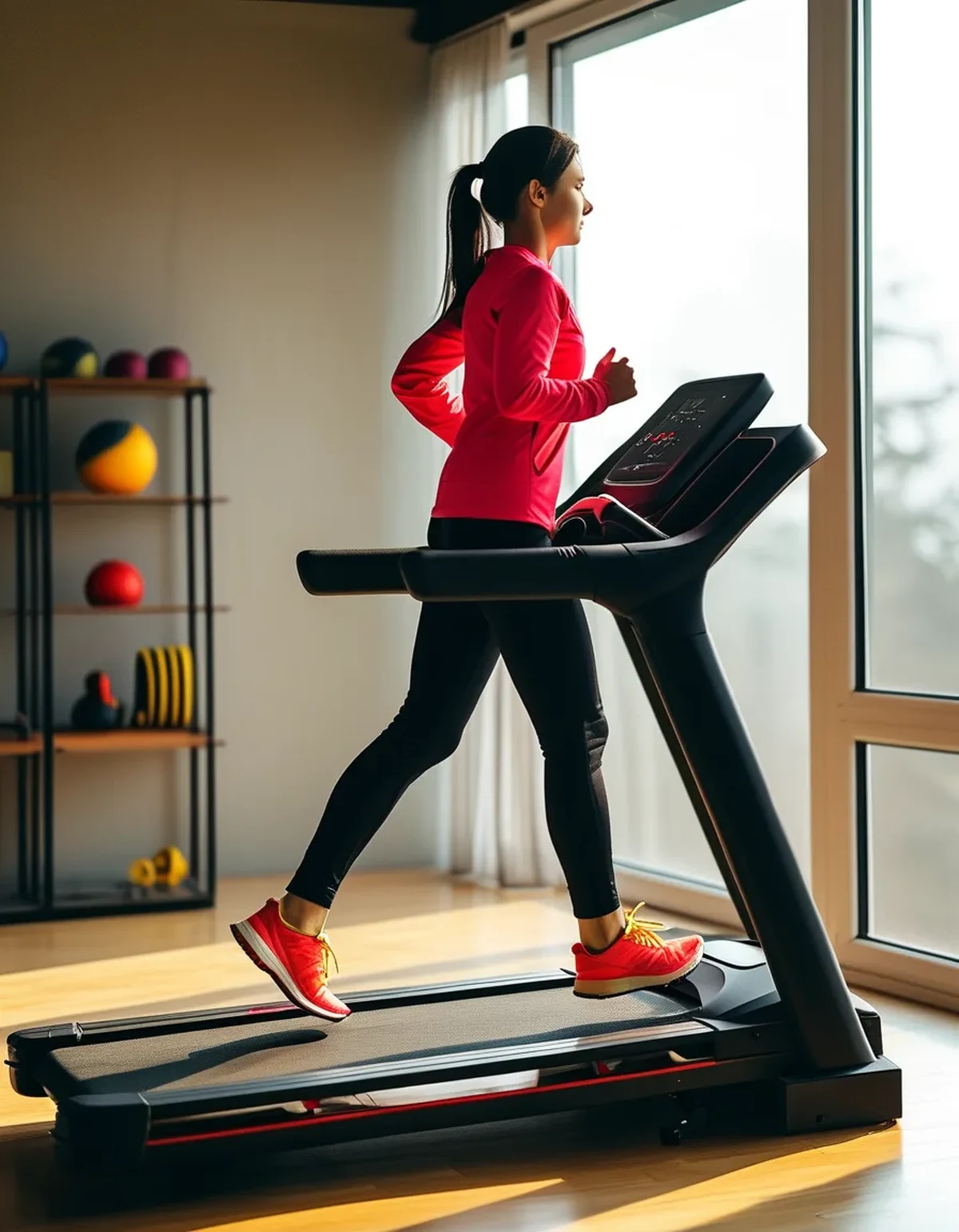
What does a treadmill belt actually do differently?
It gives, and it gives uniformly.
A running belt sits on a deck with some degree of compliance, and most modern treadmills are built with deliberate cushioning. Compared with concrete or tarmac, the surface absorbs a meaningful share of impact before your shoe has to.
The consequence is that a well-cushioned shoe on a compliant surface is over-cushioned. You get a stacked effect — soft on soft — which many people describe as vague, mushy, or like running in sand. It is not that the shoe has degraded. It is that the surface is doing part of its job and the combination is now excessive.
The second difference is uniformity. Outdoor surfaces vary constantly — camber, texture, small stones, drainage slopes, kerbs. Your foot makes hundreds of small adjustments per kilometre, and the shoe’s lateral structure participates in every one.
On a belt there is nothing to adjust to. The same motion repeats identically. That is easier in one sense and it means the stabilising elements of the shoe never engage, so a shoe chosen partly for its stability feels like it is contributing nothing.
And there is a third, more subtle point. The belt is moving under you rather than you moving over the ground. This changes the demands slightly on the propulsive phase, and it is part of why treadmill running feels different even at matched effort.
Does the treadmill change your stride?
Typically, yes — most people run somewhat differently indoors, and this affects how the shoe feels.
Commonly reported differences include a slightly shorter stride and higher cadence, and a tendency to land with the foot closer to underneath the body. Some of this is the belt speed being fixed, which removes the natural micro-variation of outdoor pacing. Some is psychological — the belt end is close, and people position themselves conservatively on it.
A shorter stride and a more central landing changes where the shoe contacts. A shoe with a substantial heel that suited your outdoor heel strike may feel entirely different if your treadmill stride lands more mid-foot.
The lack of wind resistance also matters and is worth knowing for pace comparisons — running on a treadmill removes air resistance, which is one of the standard justifications for setting a small incline of around 1% to approximate outdoor effort. Whether or not you do that, it means the effort at a given pace is not equivalent.
And there is no downhill, no cornering, and no stopping. Outdoor running includes a variety of loads that indoor running simply does not contain, and shoes designed with that variety in mind will feel underused.
Why does fit change indoors?
Heat, and the absence of moving air.
Feet swell during exercise regardless of location. Indoors, two things make it more pronounced: the ambient temperature is usually higher than outdoors at this time of year, and there is no airflow past your feet because you are not moving through space.
The result is that a shoe fitted comfortably for an outdoor autumn run can feel tight after twenty minutes on a treadmill. The upper feels less accommodating, the toe box feels shorter, and lacing that was fine outside becomes noticeable.
Three practical responses:
Lace slightly looser for indoor sessions, particularly across the forefoot. It takes ten seconds and it addresses the main symptom.
Use a fan. Airflow does more for foot temperature and comfort than most people expect, and it also reduces overall perceived effort.
Choose the more breathable pair for indoor work if you rotate shoes. A well-ventilated mesh upper matters considerably more indoors than out.
One more consideration that arrives with the season: going from cold outdoor air to a heated indoor gym changes foot volume within the first ten minutes. A shoe laced in a cold car park is frequently too tight by the time you are five minutes into a treadmill warm-up, which is a common and easily fixed source of the it-feels-wrong complaint in autumn and winter.
Myth vs Fact: Treadmill Shoes
Myth: You need dedicated treadmill shoes.
Fact: For most people, no. What helps is choosing the more breathable and less heavily cushioned pair from a rotation you already own. Buying a separate pair is only worth it if you do a large volume indoors.
Myth: Treadmill running wears shoes out more slowly.
Fact: Generally true for the outsole, because the belt is far less abrasive than tarmac, and roughly unchanged for the midsole, which compresses based on load cycles rather than surface. So you can end up with a shoe that looks new and has a flattened midsole — which is a genuine trap for anyone judging replacement by appearance.
Myth: Maximum cushioning is best for hard indoor training.
Fact: A treadmill is not a hard surface. Stacking heavy cushioning on a compliant belt is the specific combination people describe as unstable or mushy. A firmer, more responsive shoe often feels better indoors.
Myth: If your shoes feel dead on a treadmill, they need replacing.
Fact: Test them outdoors before deciding. Feeling flat on a belt and fine on pavement is a surface interaction, not a worn-out shoe.
Myth: Stability shoes are pointless on a treadmill.
Fact: Nearly true and worth stating carefully — the lateral stability features have far less to do on a uniform belt, but if you were prescribed a stability shoe for a specific reason, that reason has not gone away, and switching it out for indoor sessions is a conversation for whoever recommended it rather than a decision to make from an article.
How to set up your indoor running for the season
Six practical adjustments as more sessions move inside.
1. Rotate a firmer, more breathable pair indoors. If you own two pairs, run the more responsive one on the belt and save the heavily cushioned one for pavement. This addresses the two biggest complaints at once.
2. Relace at the start of every indoor session. Especially if you have come in from the cold. Slightly looser across the forefoot, snug at the ankle.
3. Set a small incline. Around 1% approximates the missing air resistance and, incidentally, tends to encourage a slightly more natural stride than a flat belt.
4. Put a fan on. It affects foot swelling, overall comfort and how hard the session feels. It is the cheapest upgrade to indoor running available.
5. Track mileage per shoe regardless of surface. Midsole compression accumulates with load cycles, so treadmill kilometres count towards replacement even though the outsole looks pristine. A note in your phone is enough.
6. Vary the belt speed and incline within a session. The complete uniformity of a treadmill is part of why it can be uncomfortable over time — small variations reintroduce some of the stride variety that outdoor running provides naturally.
If you have pain that appears only on the treadmill and not outdoors — or the reverse — that is genuinely useful diagnostic information and worth mentioning to a physiotherapist rather than solving by buying different shoes. This is general information, not medical advice.
FAQ: Treadmill Shoe Questions, Answered
Should I buy a different size for treadmill running?
No — the swelling difference is real but not a size’s worth. Lacing adjustment and a fan handle it. If your shoes are tight enough that half a size would fix it, they were probably too small outdoors as well.
How do I know when to replace a treadmill-only pair?
By distance and by feel rather than by appearance. Most midsoles are considered to be past their best somewhere in the 500 to 800km range depending on the foam and the runner. The outsole will still look almost new at that point.
Is running on a treadmill in old shoes worse than outdoors?
Slightly less demanding on the shoe, because the surface absorbs more. But a flattened midsole is a flattened midsole and the belt does not fully compensate.
Can I wear trainers indoors that I use outside?
Yes, and it is what most people do. The main downside is bringing grit onto the belt, which does wear it. A quick brush of the outsole before you start is sensible.
Why do my feet feel hotter on a treadmill even in a cool room?
Because you are not moving through air, so there is no convective cooling past your feet at all. Even a cool room without airflow produces noticeably more foot heat than a cold outdoor run.
Does the same apply to walking on a treadmill?
The surface and airflow effects apply identically. The stride change is smaller at walking pace, so shoe feel differs less — but the swelling and lacing point holds.
TL;DR:
- A treadmill belt is compliant, so a well-cushioned shoe becomes over-cushioned and feels mushy
- The surface is perfectly uniform, so the shoe’s lateral stability elements never engage
- Most people shorten their stride indoors, which changes where the shoe contacts
- Warmer air with no airflow means more foot swelling, so lace looser and use a fan
- Treadmill mileage still compresses the midsole even though the outsole looks new — track it
Before your next indoor session, loosen the forefoot lacing by one eyelet and point a fan at the treadmill. Two adjustments, no purchase, and they address most of what feels wrong about running inside.
Keep Reading
This article is for general informational and styling purposes only. Fit, sizing, and product availability may vary.