Why Your Sneakers Fit Differently After a Long Flight or Drive
Quick Answer: Sitting still for hours slows the calf-muscle pump that normally returns fluid from your feet, so fluid pools and foot volume rises — commonly by several percent, which is enough to change how a shoe fits by roughly half a size. Wear your looser pair for travel, lace them in a way you can release without retying, and stand or flex your ankles every hour. The swelling is normal and usually resolves within a day.
They felt fine at the gate.
Six hours later you are prising the heel off with the other foot.
Your shoes did not shrink.
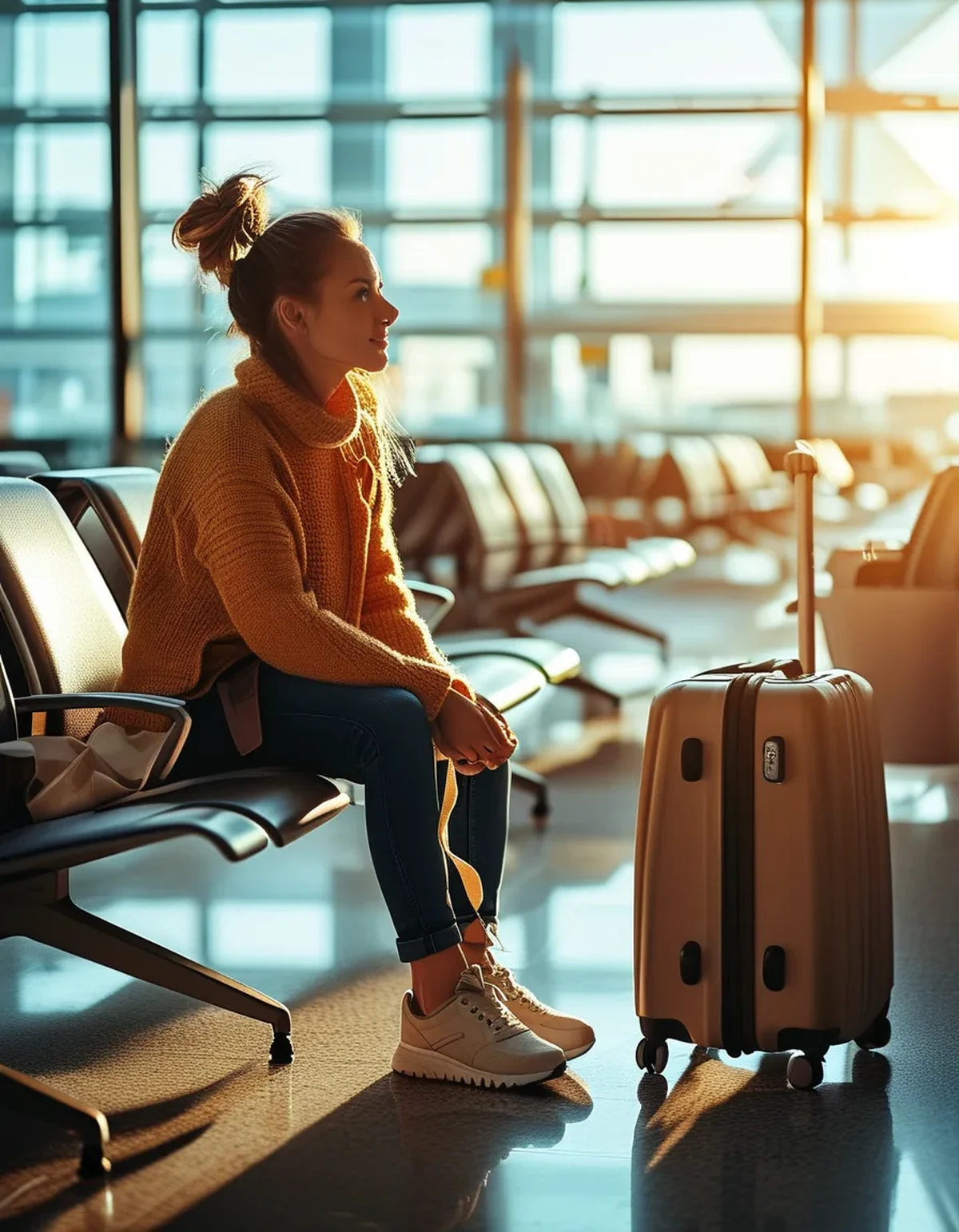
Why do feet get bigger when you sit still?
A circulation mechanism, and it is entirely mechanical.
Blood returns from your feet to your heart largely because your calf muscles squeeze the deep veins as you walk. This is often called the calf-muscle pump, and it is doing constant work you never notice.
Sitting still switches it off. With no contraction, return flow slows, pressure in the small vessels of the foot rises, and fluid moves out into the surrounding tissue. Foot volume increases measurably over a few hours of sitting, and the effect is greatest in the forefoot and around the ankle.
Cabin pressure adds to it on a plane, but sitting is the larger factor. A long car journey produces a very similar effect at ground level, which is the simplest evidence that altitude is not the main driver. Being a passenger is worse than driving, because a driver’s ankles move.
Heat makes it worse. Warm conditions cause vasodilation, so a summer drive with the sun on your legs swells more than a cool one.
The change is not small in shoe terms. A few percent of foot volume is easily half a size of perceived fit, and it lands almost entirely in the areas where shoes are least forgiving — across the top of the foot and around the widest part.
What should you actually wear to travel in?
Five practical choices that make the difference.
Wear your looser pair, not your favourite pair. Travel is the wrong time for the shoes that fit perfectly — perfect fit at 8am becomes tight by 2pm. If you own two pairs, this is what the roomier one is for.
Choose a shoe with real adjustability. Laces beat slip-ons decisively here, because you can release tension progressively without taking them off. A slip-on that fits at departure has no give left to offer.
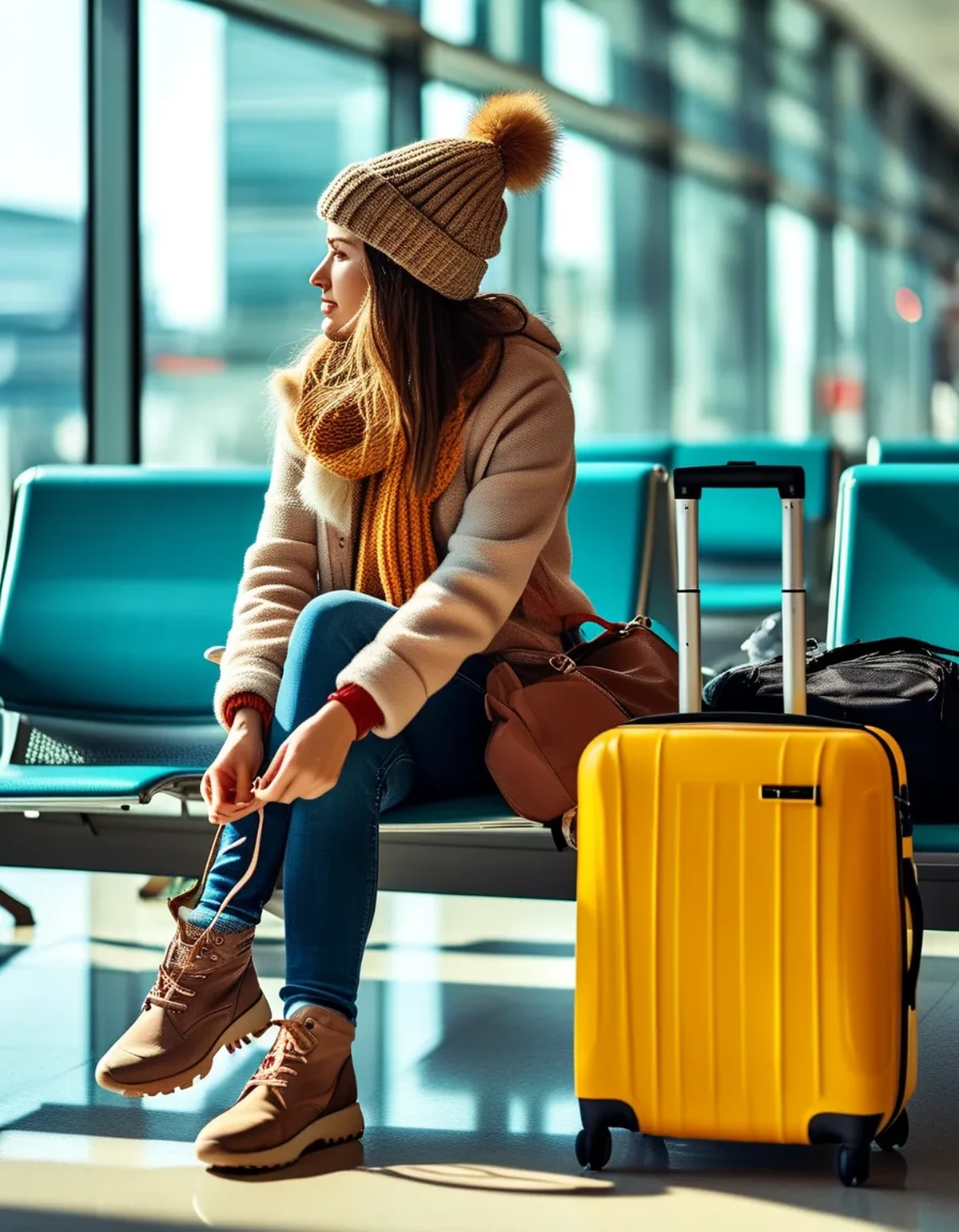
Lace for release before you leave. Tie them so you can pull one end and loosen the forefoot without retying the whole shoe in a cramped space. Skipping one eyelet in the middle gives you extra room across the top of the foot where the swelling shows up first.
Avoid anything with a firm, non-stretch upper across the instep. Knit and mesh uppers accommodate change; structured leather and rigid overlays do not.
Take the shoes off, but put them back on before landing or arrival. Feet that have been out of shoes for hours are at their most swollen, and the classic mistake is discovering this in the aisle. Put them back on about 30 to 45 minutes before you arrive, loosened.
Compression socks genuinely work for this and are worth considering on long flights, particularly if you have had swelling problems before. They also address a separate and more serious circulation concern on very long journeys, which is worth a conversation with a doctor rather than a blog.
Myth vs Fact: Travel Feet
Myth: it is the cabin pressure. Fact: it is mostly immobility. A six-hour drive produces comparable swelling to a six-hour flight, and cabin pressure contributes rather than causing it. This matters because it means the fix is movement, which you control, rather than altitude, which you do not.
Myth: swelling means the shoes are too small. Fact: it means they were sized for a normal-volume foot, which is correct. Buying travel-sized shoes for everyday wear gives you loose shoes 360 days a year to solve a problem that occurs on five.
Myth: taking your shoes off during a flight is the fix. Fact: it relieves the pressure and does nothing about the fluid — and it lets the foot swell more freely, which is why getting them back on is harder afterwards. Loosening beats removing.
Myth: walking around the cabin once is enough. Fact: frequency beats duration. Ankle circles and calf raises in your seat every hour do more than one long walk, because the pump needs regular activation rather than a single burst.
Myth: it resolves as soon as you stand up. Fact: it typically takes several hours to a day. Elevating your feet above heart level for 15 minutes on arrival speeds it up meaningfully, which is the most useful thing you can do in a hotel room.
How does this change how you buy shoes?
It gives you a rule that solves a much broader problem than travel.
Try shoes on in the afternoon or evening, never first thing. Feet are at their smallest in the morning and can be several percent larger by late afternoon through ordinary daily activity. A shoe fitted at 9am will be tight for the second half of every day it is worn.
Fit to your larger foot. Most people have a measurable difference between feet, and the smaller one can be adjusted for with lacing and socks. The larger one cannot be adjusted downward.
Leave about a thumb’s width at the toe. This is not slack, it is room for normal daily volume change plus the forward movement of the foot when you walk downhill.
Try shoes on in the socks you will wear. Sock thickness is worth a substantial fraction of a size, and it is the most commonly overlooked variable in a fitting.
Walk on a hard floor, not carpet. Shop carpet flatters everything and hides the pressure points you will feel on pavement.
A seasonal note that catches people out every year: late-summer feet are at their largest of the year thanks to heat, and autumn feet are smaller in thicker socks. The pair you sized in August can feel loose in October and tight again next July — that is a foot cycle, not a shoe defect, and it is worth remembering before you replace a pair that was fine three months ago.
FAQ: Foot Swelling and Fit Questions, Answered
How much do feet actually swell on a long journey?
Enough to matter — commonly a few percent of volume over several hours of sitting, which reads as roughly half a shoe size in perceived fit. The forefoot and ankle change most; heel fit changes least, which is why the top of the foot is where you feel it first.
Is swelling after a flight something to worry about?
Usually not on its own — mild, symmetrical swelling that resolves within a day is normal. Swelling in one leg only, especially with pain, warmth, or redness, is different and should be assessed promptly. This is general information rather than medical advice, and that specific pattern is worth medical attention rather than a wait-and-see.
Do compression socks really help?
For travel swelling, yes — they support the return flow the calf pump would normally provide. Graduated compression is the type designed for this. If you have circulation or vascular conditions, check with a doctor about the right pressure rather than choosing by guesswork.
Should I size up for shoes I will mostly travel in?
Half a size, at most, and only if travel really is the main use. A better approach for most people is a lace-up with an accommodating upper at true size, which handles both states rather than being wrong in one of them.
Why does one foot swell more than the other?
Often just position — the leg that was more cramped or less able to move swells more. Consistent asymmetric swelling that shows up without travel is worth mentioning to a doctor, since it can have causes worth ruling out.
TL;DR:
- Sitting still switches off the calf-muscle pump, so fluid pools and foot volume rises.
- The change is worth roughly half a shoe size, concentrated across the top of the foot.
- A long drive does this too — it is immobility, not cabin pressure.
- Travel in your looser lace-up pair, and loosen rather than remove them.
- Put shoes back on 30 to 45 minutes before arrival, while you still can.
- Buy shoes in the afternoon, fit the larger foot, and leave a thumb’s width at the toe.
The shoes were right. The feet were different.
Keep Reading
This article is for general informational and styling purposes only. Fit, sizing, and product availability may vary.